



Brian Cleary poses with a newly released copy of Bram Stoker’s “Gibbet Hill,” illustrated by Irish artist Paul McKinley.
Peter Murphy/AFP via Getty Images
In 1890, a short ghost story by the Irish writer Bram Stoker– who would publish Dracula seven years later – walked into the Dublin Daily Express. The terrifying story, entitled ‘Gibbet Hill’, was then forgotten. For more than 130 years the piece lay in the shadows until a clinical pharmacist chanced upon it in the National Library of Ireland.
Brian Cleary, a longtime Stoker fan, was browsing through the library’s archives last year when he saw an advertisement from 1891 in the library. Dublin Daily Express. The advertisement referred to a previously published story by Stoker, which led Cleary to an edition printed a few weeks earlier on December 17, 1890, which contained “Gibbet Hill” in full.
“I was just amazed,” says Cleary New York Times‘Sara Lyall. ‘I went to all the bibliographies, but there was nothing anywhere. I wanted to turn around and shout, “Guess what I found?” but there were real researchers and academics there, and I was just an amateur.
Cleary began researching the story and its author, and offered advice Paul Murrayauthor of From the Shadow of Dracula: A Life of Bram Stoker. Literary scholars have never referred to “Gibbet Hill,” and the story does not appear in other Stoker archives, leading Murray to conclude that it “had been missing for more than a century,” writes Artnetby Richard Whiddington.
A 1919 edition of Stoker’s Dracula Edgar Alfred Holloway / Public domain via Wikimedia Commons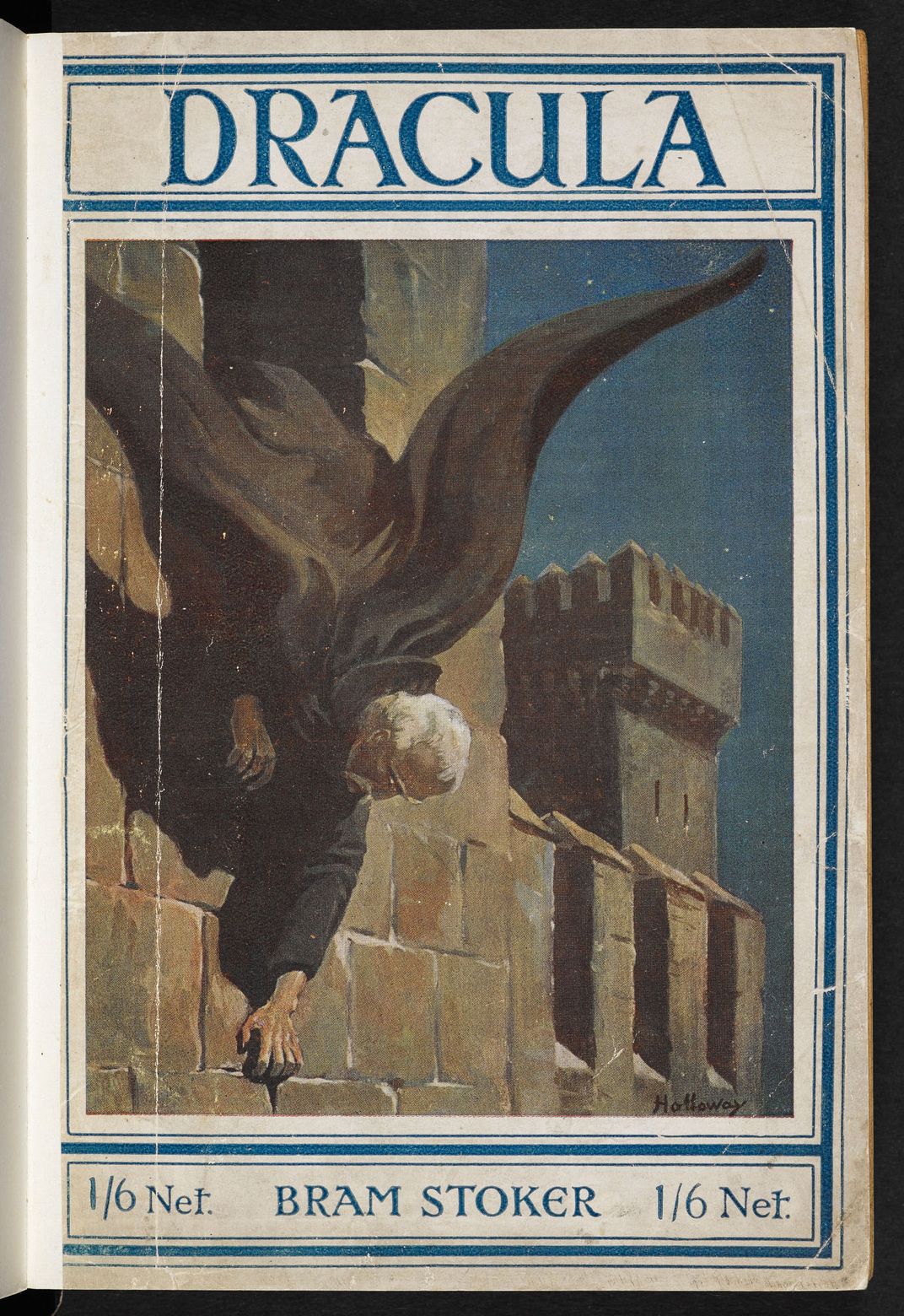
‘Gibbet Hill’ is a disturbing story full dark themes to which Stoker would return Dracula. Set in Surrey, England, it follows an unnamed narrator who has an ominous encounter with three strange children near the grave of a murdered sailor.
“It’s a classic Stoker story,” Murray tells Peter Murphy Agence France-Presse (AFP). “The battle between good and evil – evil that shows up in exotic and unexplained ways.”
Murray adds that “Gibbet Hill” is an example of Stoker’s development as a writer. It was printed the same year that Stoker began work on it DraculaA Gothic novel about a count of the same name who lives as a vampire in Transylvania. Derived from legendsthe literary work inspired an entire genre of vampire fiction and lore.
Stoker’s newly discovered story is being republished in a book with cover art and illustrations by Irish artists Paul McKinley. Proceeds will go to the Charlotte Stoker Fund, which supports research into deafness in newborn babies. The organization is named after the writer’s mother, who stood up for the deaf.
Bram Stoker, pictured here in 1906, published his critically acclaimed novel Dracula in 1897.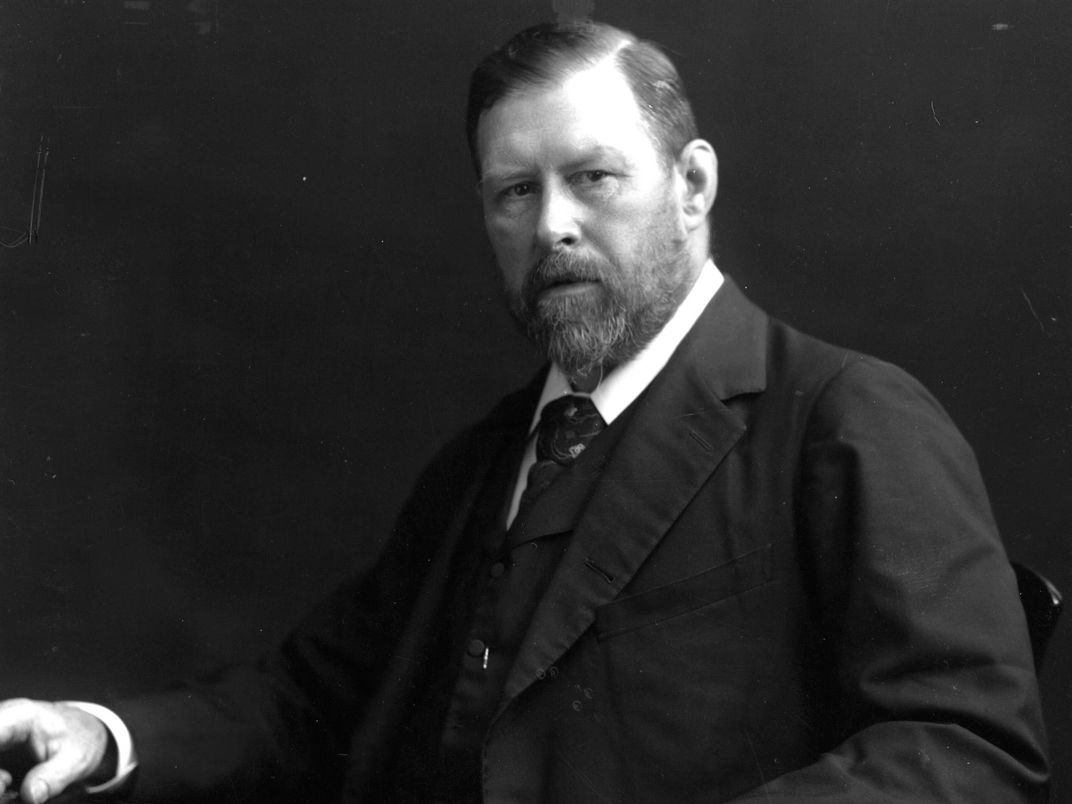
Coincidentally, Cleary had recently received a cochlear implant and spent long periods of time in the library working his way through intensive auditory therapy.
“I was like a baby learning to hear again,” he says Times. “A lot of things wouldn’t have happened if I hadn’t had hearing loss.”
The story will come later this month read for the first time publicly on the Dublin City Council’s Bram Stoker Festival. The lecture will take place in the Casino Marinoan 18th century temple not far from the author’s birthplace.
McKinley’s illustrations are inspired by the eerie images in Stoker’s story. For example, a “juicy, wet, oily painting” depicts a young character holding a pile of earthworms, the artist told AFP.
“When Brian sent me ‘Gibbet Hill’ there was so much I could work with,” he adds. It was a ‘fascinating challenge’ to ‘create new images for an old story that has been buried for so long’.


