


News
Employees say they were forced to take action after negotiations over a new contract were stalled for almost two years.

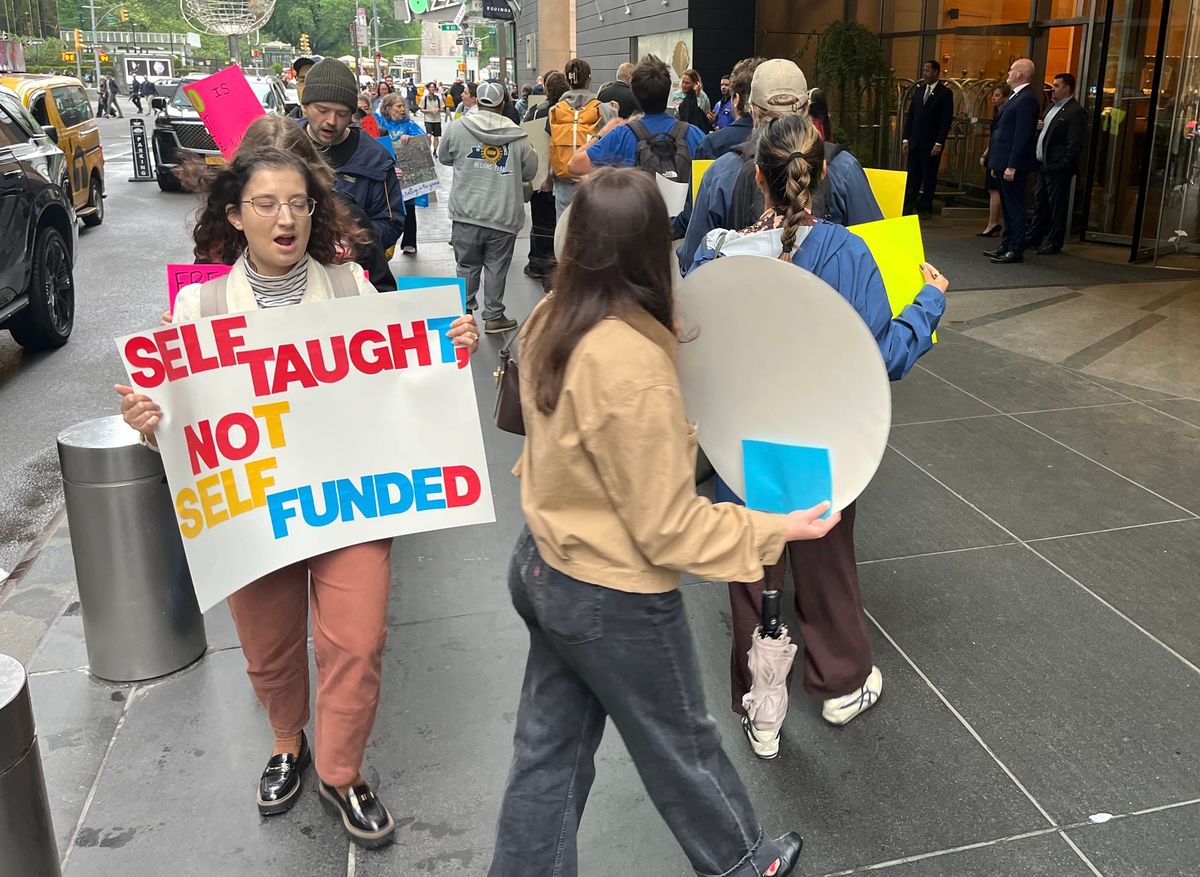
These people want a fair contract.
Employees of the American Folk Art Museum in New York City joined three dozen organizers from UAW Local 2110 to rally the museum’s annual gala at the Mandarin Oriental in Columbus Circle on Wednesday evening, May 6, demanding higher wages and better working conditions.
Union members marched for two hours in front of the luxury Upper West Side hotel, holding signs reading “For Folk’s Sake” and “Self Taught, Not Self Funded,” chanting, “What is disgusting? Union broken! What is scandalous? Poverty wages!’
Employees say they were forced to take action after negotiations over a new contract were stalled for almost two years.
“The museum can raise all the money it wants, but if it doesn’t pay its employees fairly, the museum can’t function properly,” said Eve Erickson, the museum’s development officer for institutional giving. Hyperallergic. “No art without museum staff.”
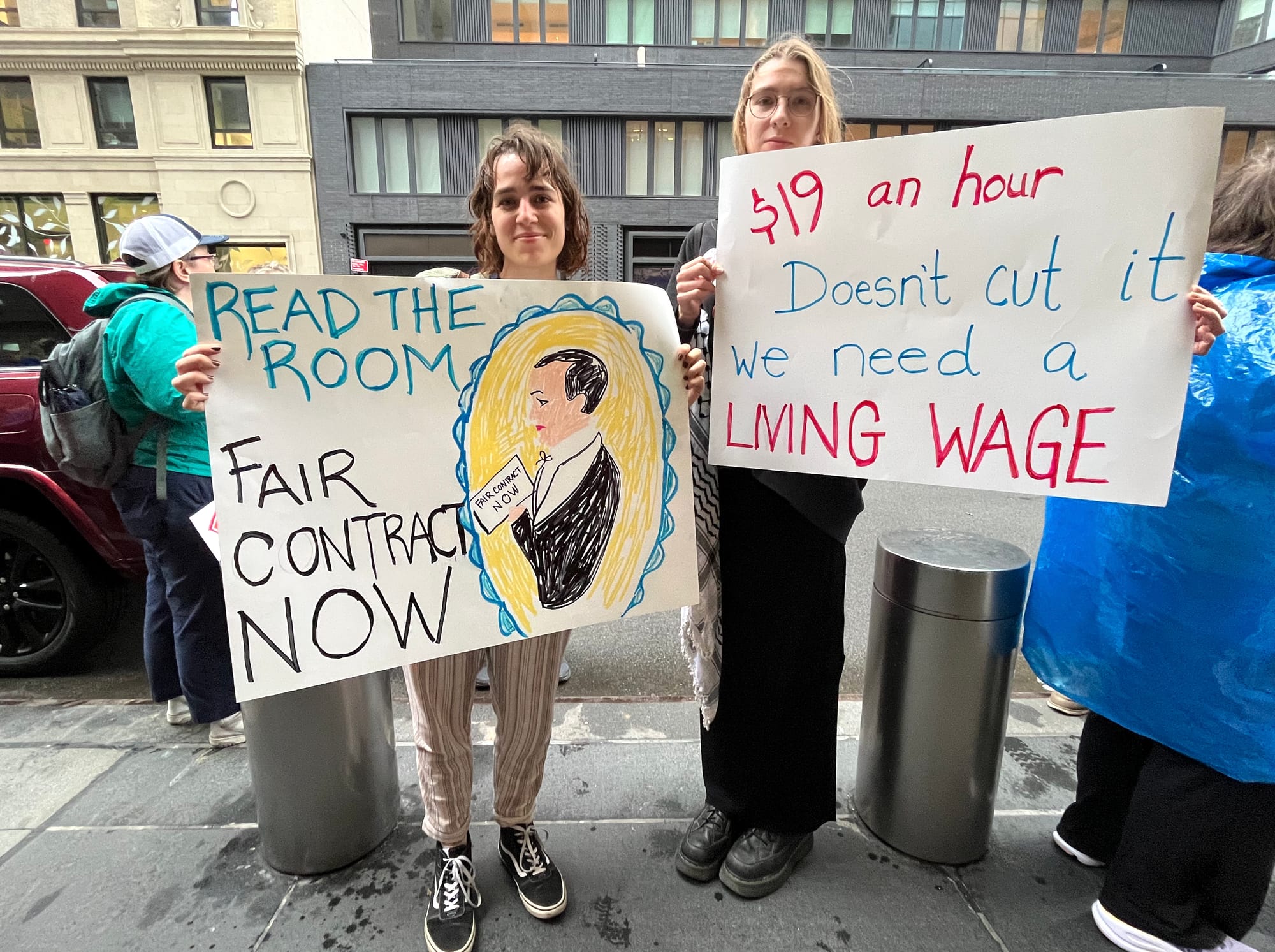
Workers have been negotiating with museum administrators for higher minimum wages and benefits since shortly after voting to join the UAW Local 2110 in June 2024.
Frontline workers at the Columbus Avenue institution, who greet visitors, run the gift shop and maintain the building, currently earn $19 an hour or $58,686 a year, about $12,000 less than the living wage in New York City, as calculated by MIT. Maintenance workers earn similar rates at nearby art museums, including MoMA PS1, whose staff demonstrated for higher wages two years ago. (According to the museum’s tax filings, Jason Busch, CEO of the American Folk Art Museum, earned $321,882 in compensation during the 2024 fiscal year.)
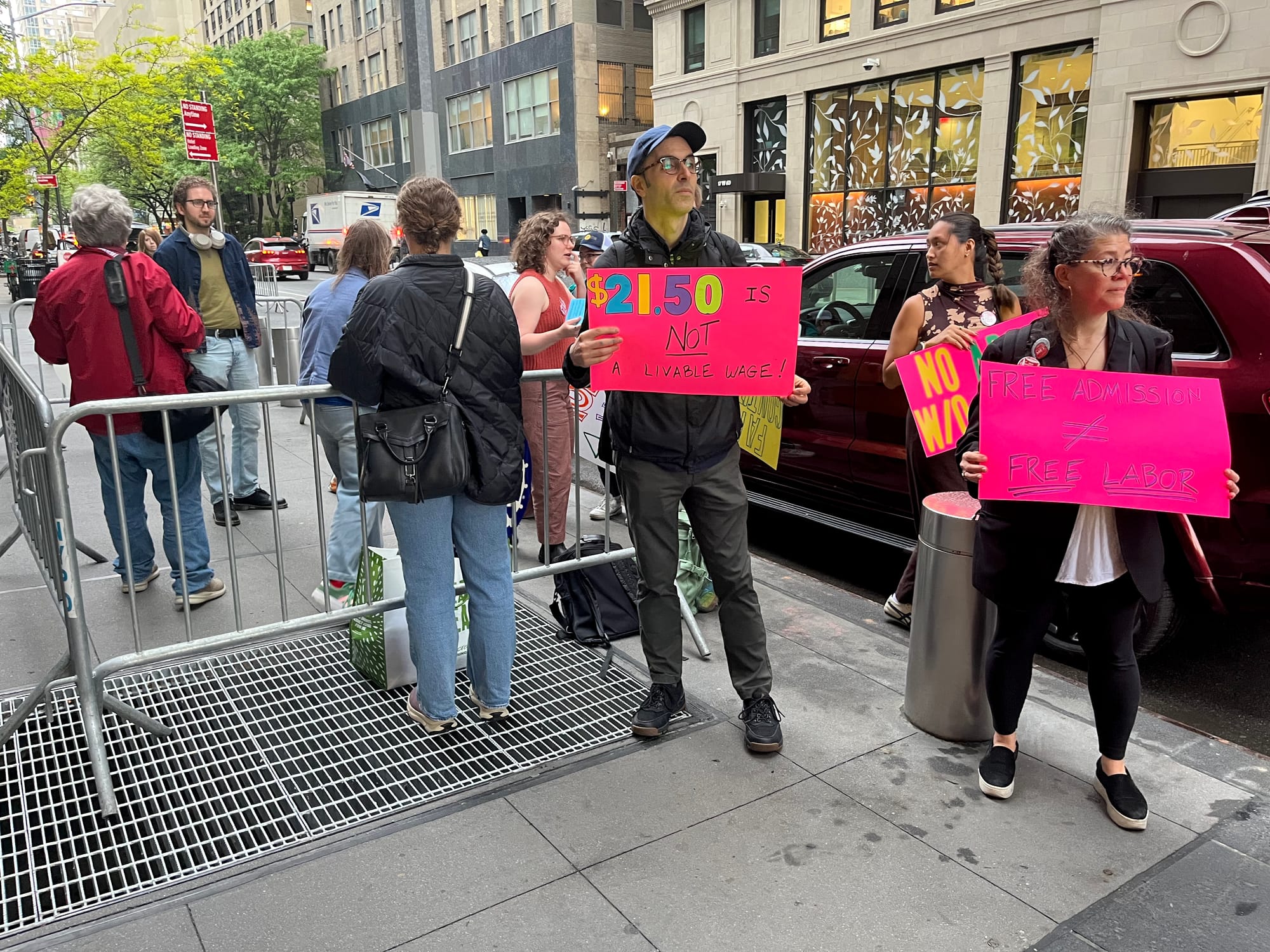
In October 2024, union representatives from the American Folk Art Museum requested that their employers award a three-year contract and increase wages for these employees to $30 per hour by the end of the third year. But museum leaders only offered to increase wages to $21.50 an hour and would not guarantee existing benefits, including health care and hybrid schedules, an outcome the union’s bargaining unit deemed unacceptable.
Negotiations dragged on as the museum closed its building at 2 Lincoln Square last fall for a six-month renovation funded by the building’s owner, the Church of Jesus Christ of Latter-day Saints. In the meantime, officials have eliminated several union positions and outsourced the work to consultants and contractors, union representatives said.
“The entire negotiation was marked by hostile employer responses and bad faith negotiations,” said Maida Rosenstein, organizing director for Local 2110 UAW.
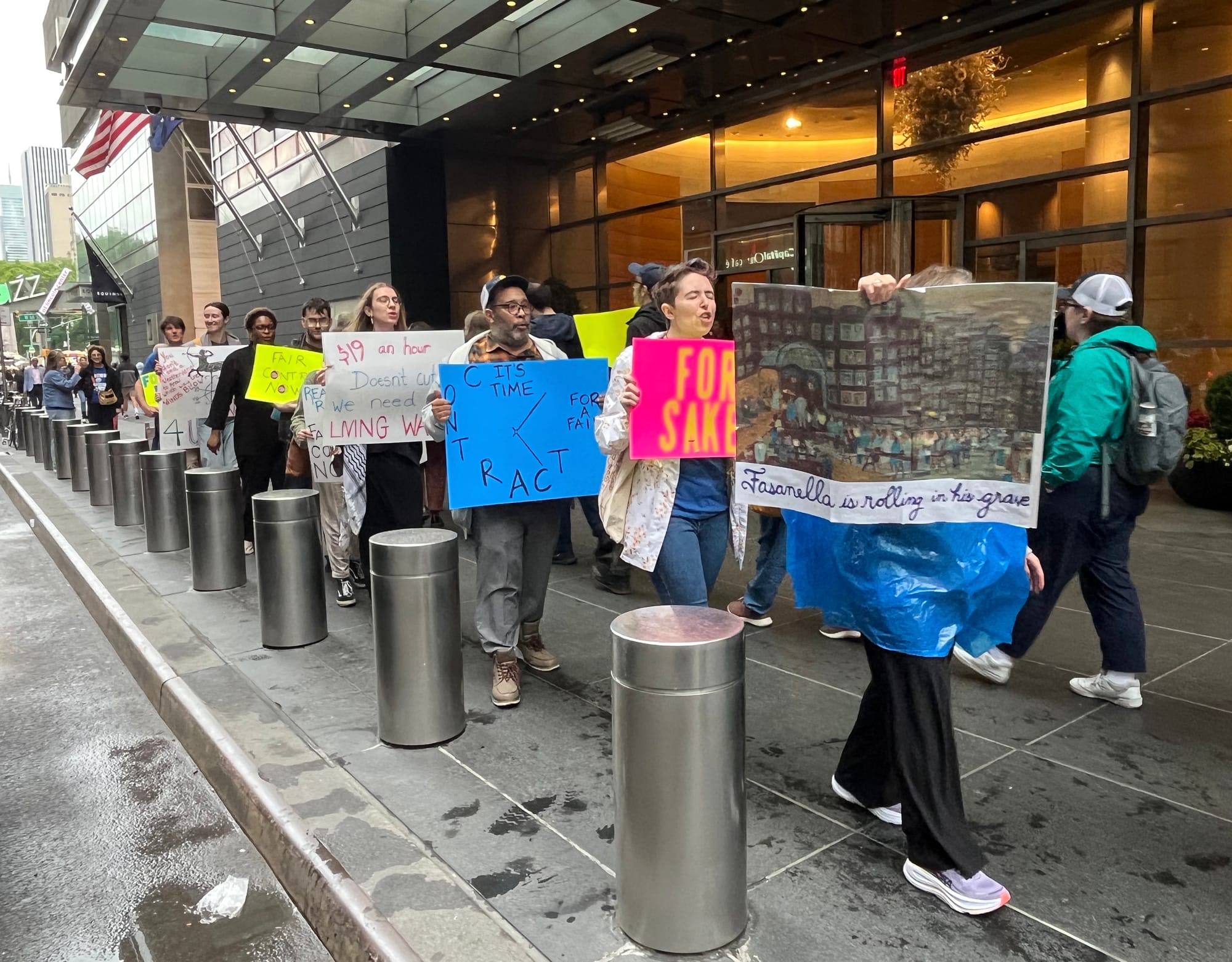
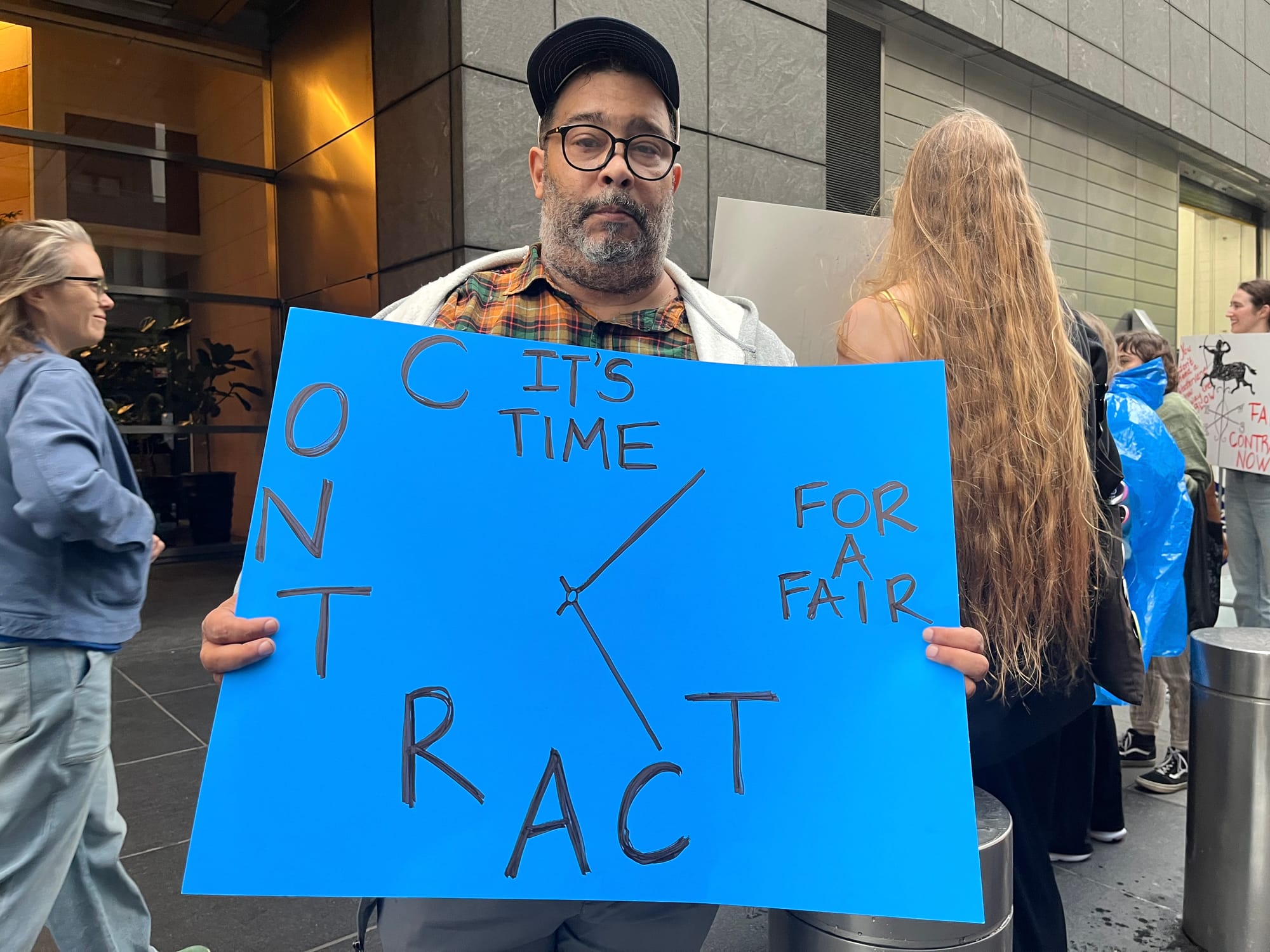
Staff members became frustrated with the delays and high turnover. They handed out flyers ahead of the museum’s reopening on April 9, celebrating the new exhibition, Self-Made: A Century of Inventing Artistswith 90 works from the early 20th century to the present. Last night they gathered for the museum’s fundraiser, which museum officials said was expected to draw 250 guests and raise several hundred thousand dollars.
Museum officials would not reveal how much money the gala raised or say when negotiations might be completed.
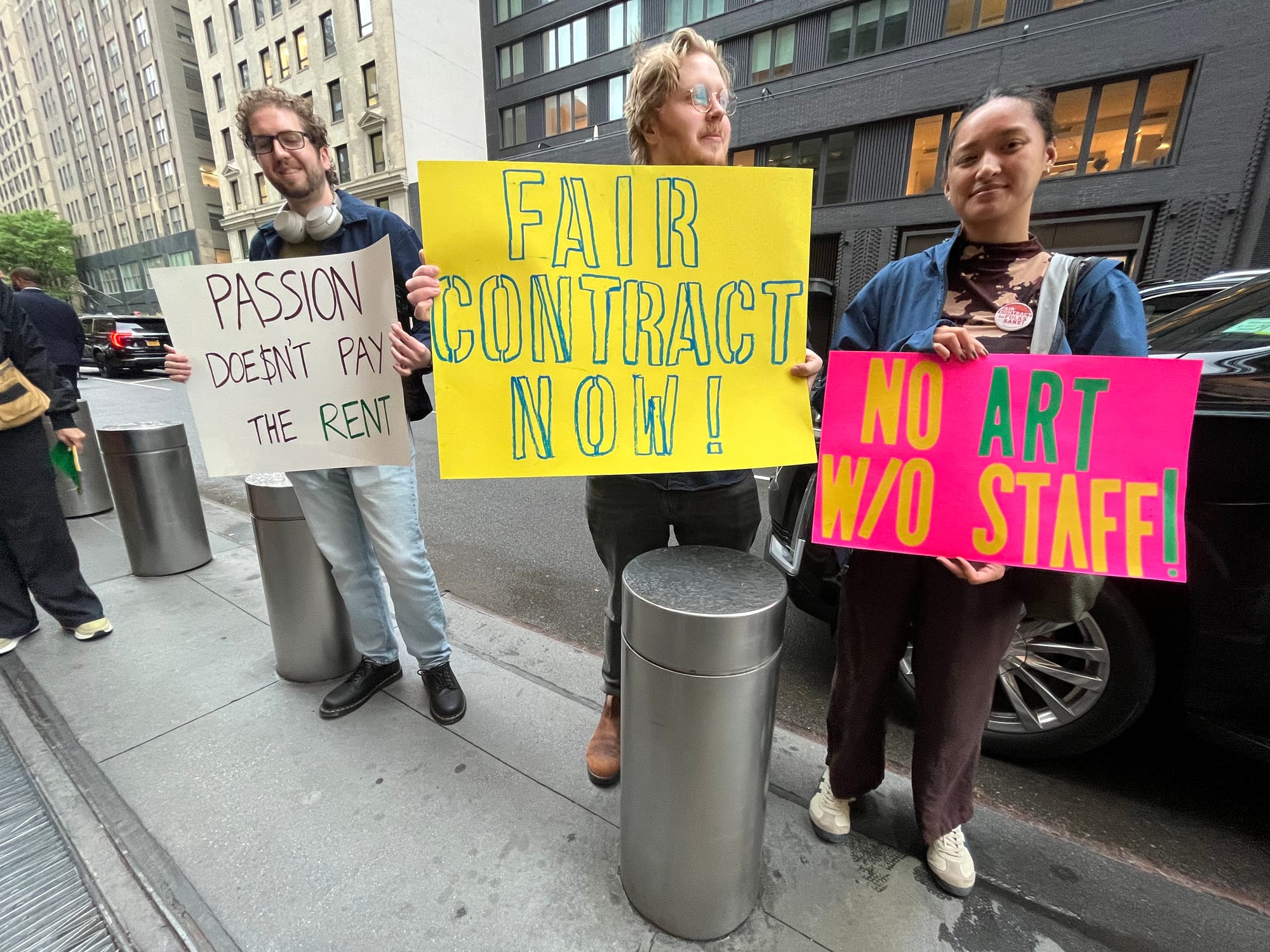
“We respect our employees’ decision to join a union and are committed to working in good faith toward a fair and mutually beneficial contract,” a museum spokesperson said in a statement.
The protest was unusually intimate. Several administrators hugged the union museum staff and took flyers and UAW buttons before entering the hotel. Artist Vanessa German, one of the winners of the Folk Art Museum gala, accepted five buttons, while other donors said they supported the demonstration.
Jean Seestadt, a former events manager at the museum who now works for the UAW, said she hoped the museum would quickly finalize a new contract with higher wages.
“I love the museum. I hope they make a lot of money tonight so they can pay their employees more,” she said.


