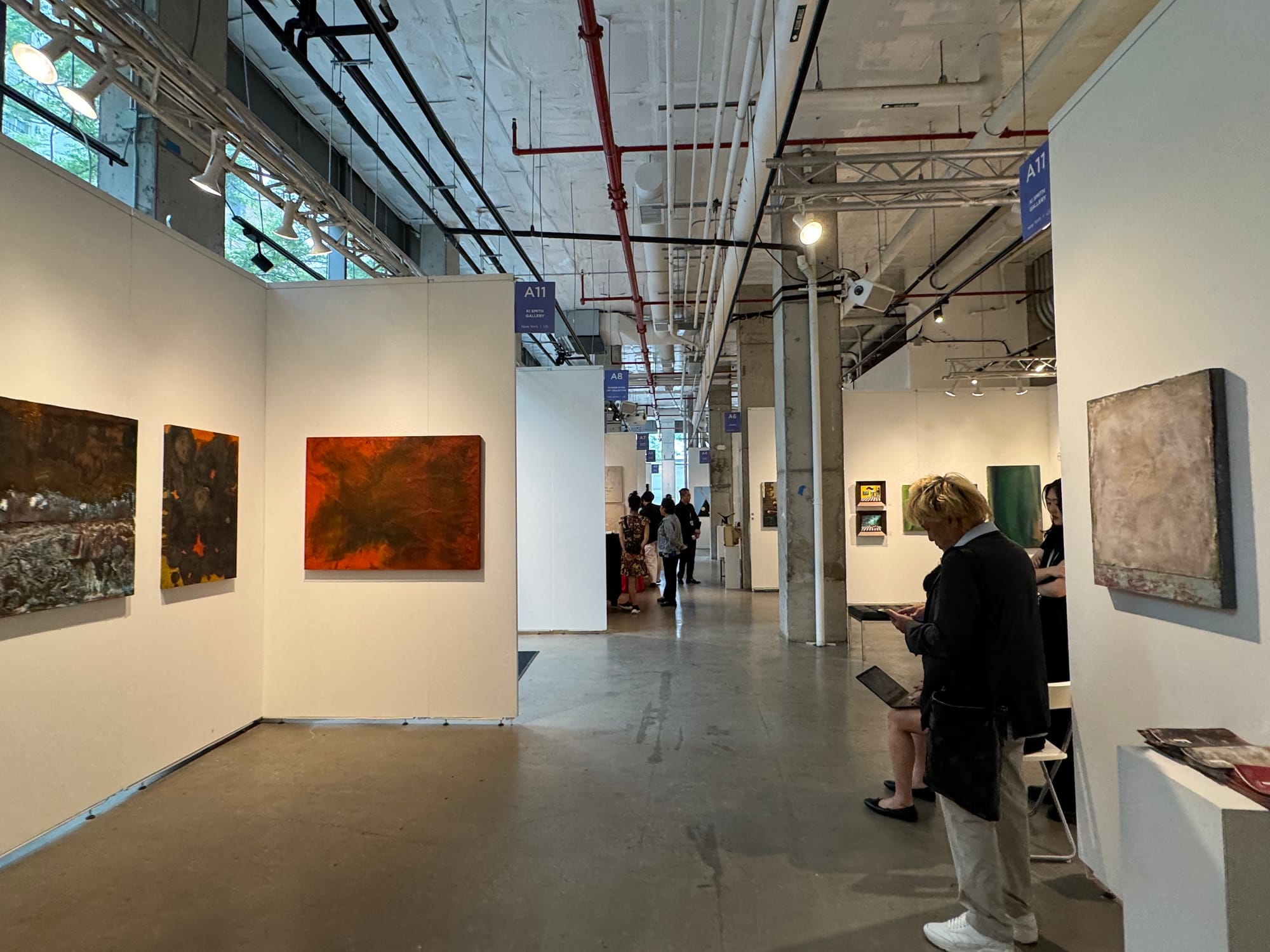


After a day of Googling why my back hurt (sedentary computer lifestyle, inflamed SI joint), it only made sense that the art fair I attended that same afternoon would contain an element of human-technical body horror.
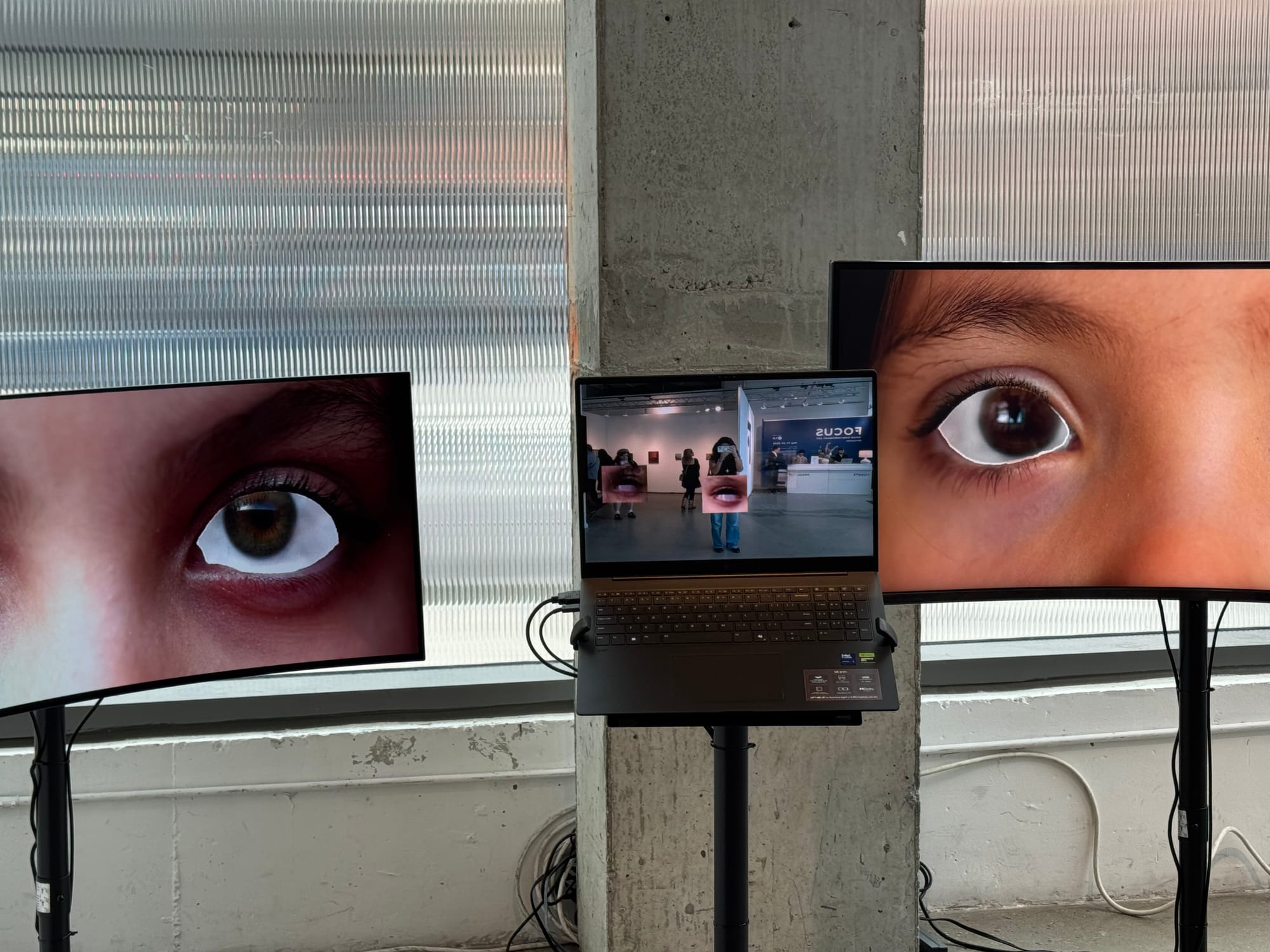
When I arrived Thursday at the press preview for Focus Art Fair, dedicated to Asian art and held at Chelsea Industrial through Sunday, May 24, it seemed fitting that I would walk into a lobby full of digital elements. I was immediately met with a shot of myself on a computer screen, but this version of me had a giant eyeball over her.
The interactive installation “What if two eyes don’t work together?” by South Korean artist Hwia Kim, is the first taste visitors get of the theme of the fair’s fourth edition, ‘coexistence between humans and technology’. This thematic anchor felt timely and even corporate, as one of the fair’s main sponsors was the technology conglomerate LG Electronics.
This year, Focus features more than 40 galleries and presenters showcasing artists from Asia and the diaspora, although not all participants fit that description.
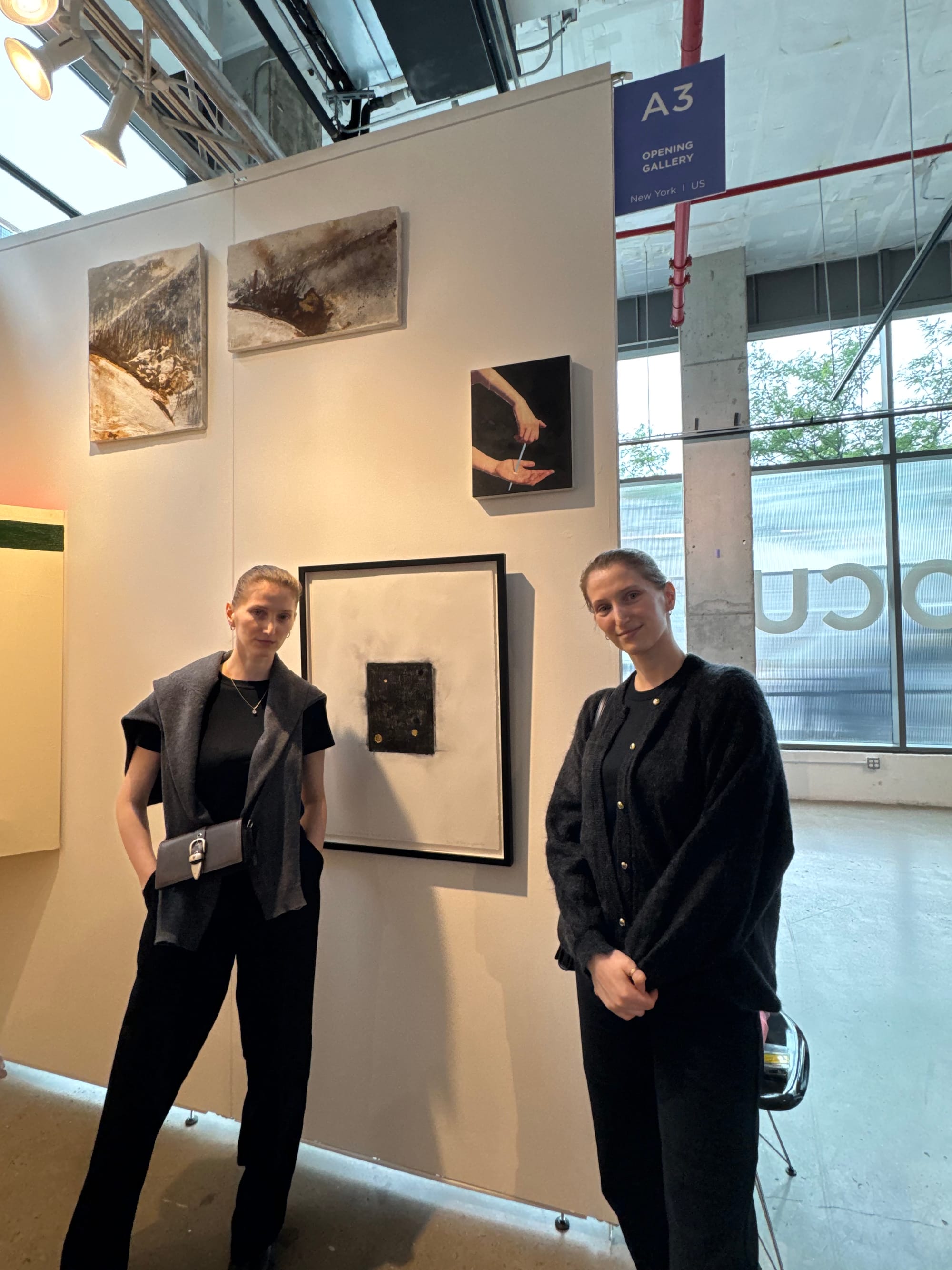
Immediately after watching my torso turn into a glittering eyeball, I was surprised to encounter the disarmingly warm, Ukrainian-born F-Twins (Anna and Valeriia Lyshchenko). The identical twin sisters create together, speak together and co-founded the Primarealism art movement in response to a perceived growing cultural desire to outsource critical thinking to AI.
The sharply intelligent artists guided me through their pieces on display at the entrance to the Opening Gallery: “You Don’t Have To” (2026), a painting in which one hand removes a blue nail from another in a declaration of self-determination in the face of difficult circumstances, and “To Save the First, You Must See the Night Sky from Me” (2026), a black charcoal and gold leaf on paper work. Their practice, they explained, extends the sense of interconnectedness they feel as twins to the broader world.
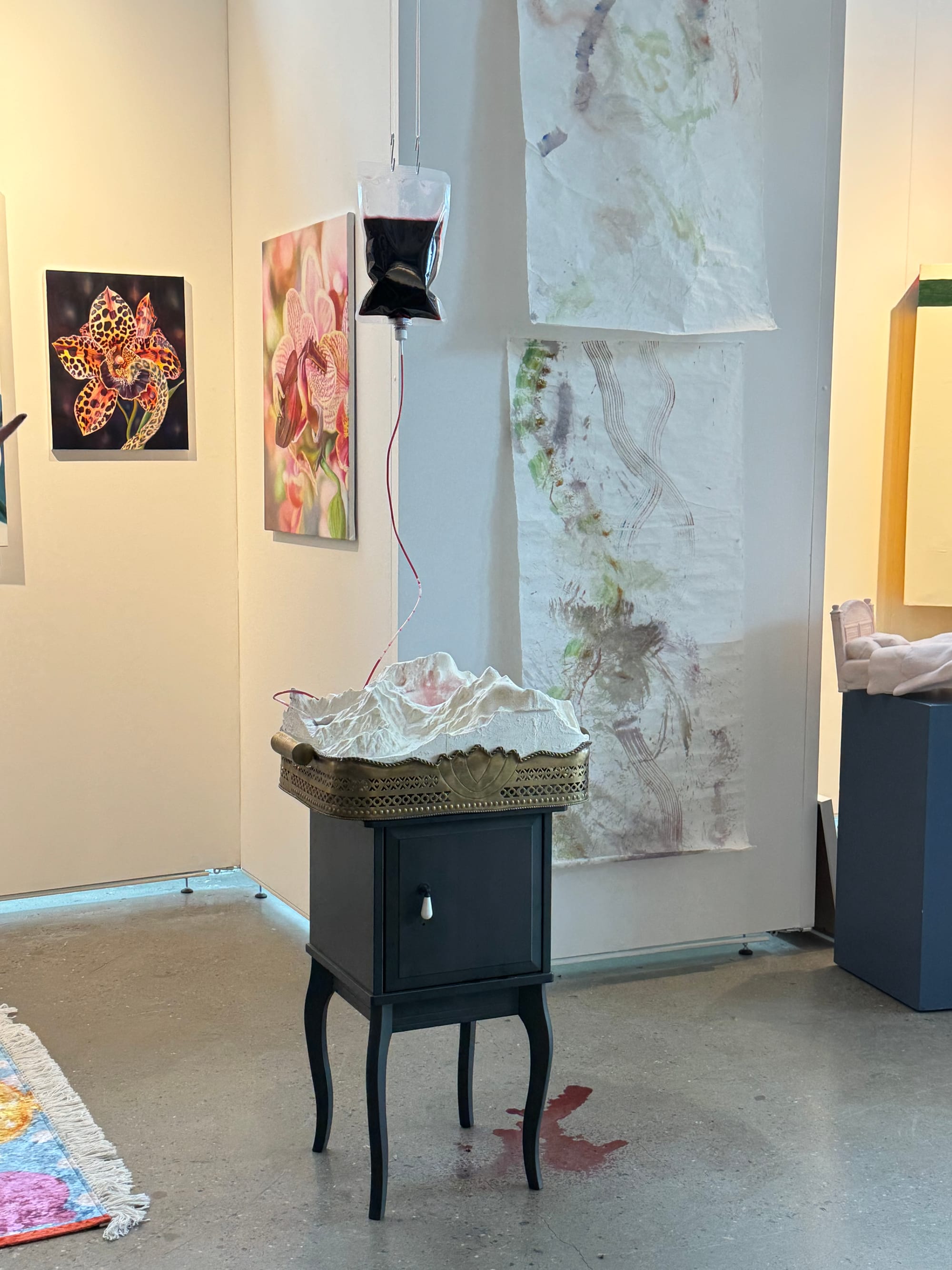
In a more political work in Opening Gallery, an IV-type device dripped hibiscus juice over a miniature white model of Himalayan-born artist Annu Yadav’s installation ‘This Land is Wounded’ (2025), a commentary on the militarized border between India and Pakistan.
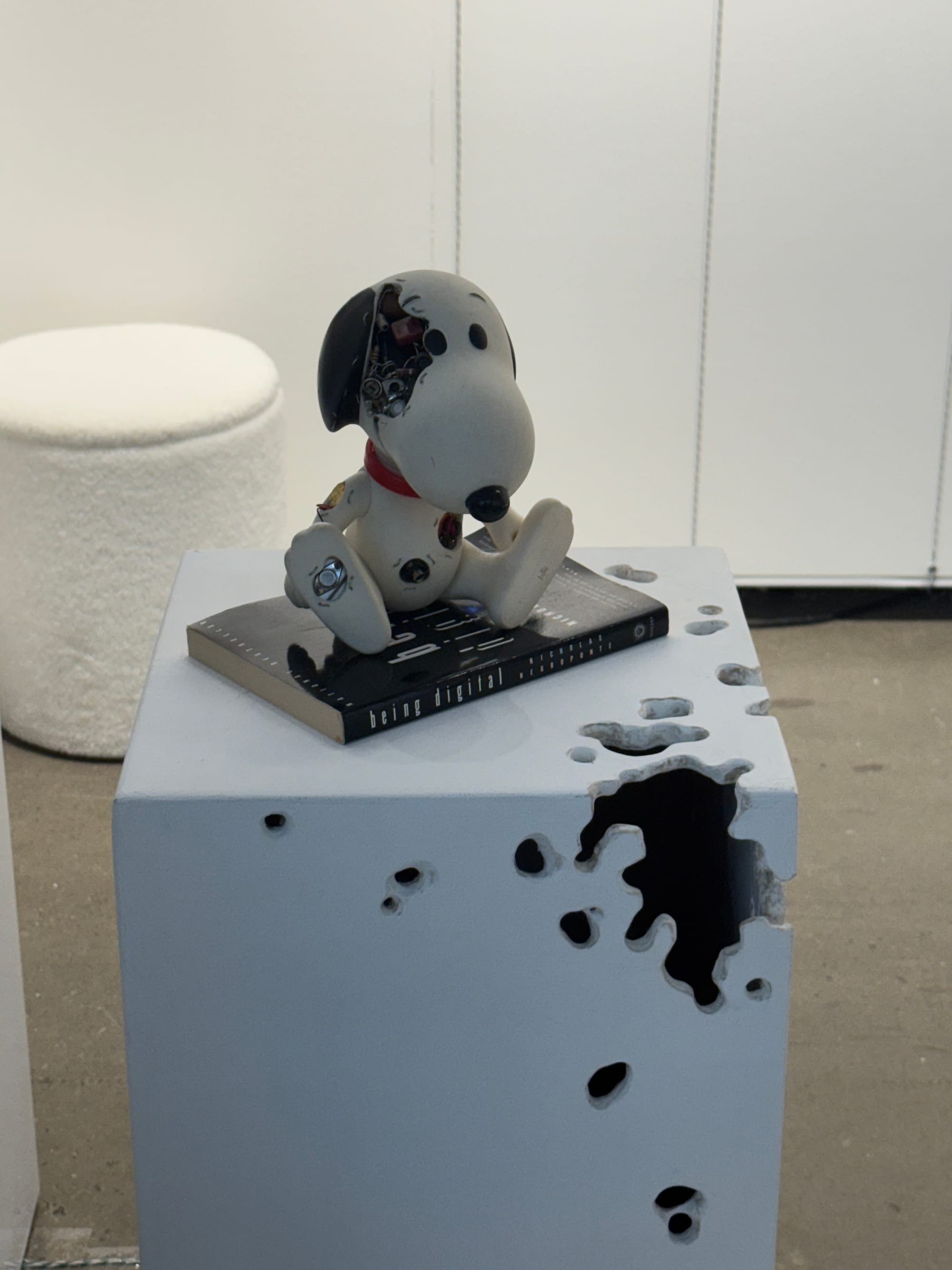
At the nearby Jakupsil booth, I found Taezoo Park’s “Hacked Snoopy” (2025), a small-scale sculpture featuring the cartoon dog, embellished with electronic chips, atop a copy of Nicholas Negroponte’s seminal 1995 book. Being digital.
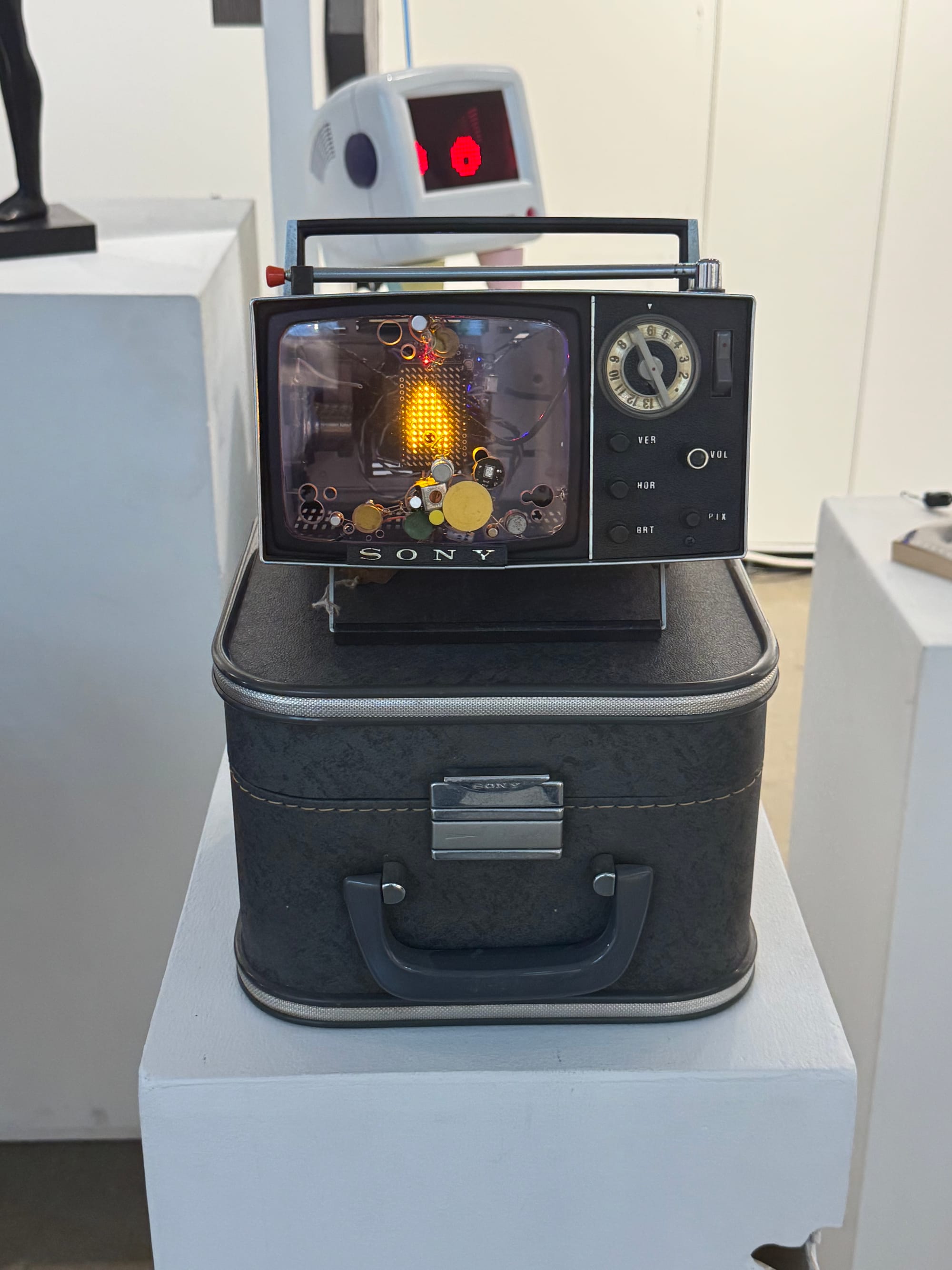
Next to Snoopy, I saw “Yellow Candle with Sony 5-303W” (2024), a vintage television whose naked technological guts were exposed to the viewer.
“These are neglected technologies,” explains Brett Lee, the gallery’s founder Hyperallergic. “[Park] says that all these digital beings live forever; It’s a kind of memorial.”
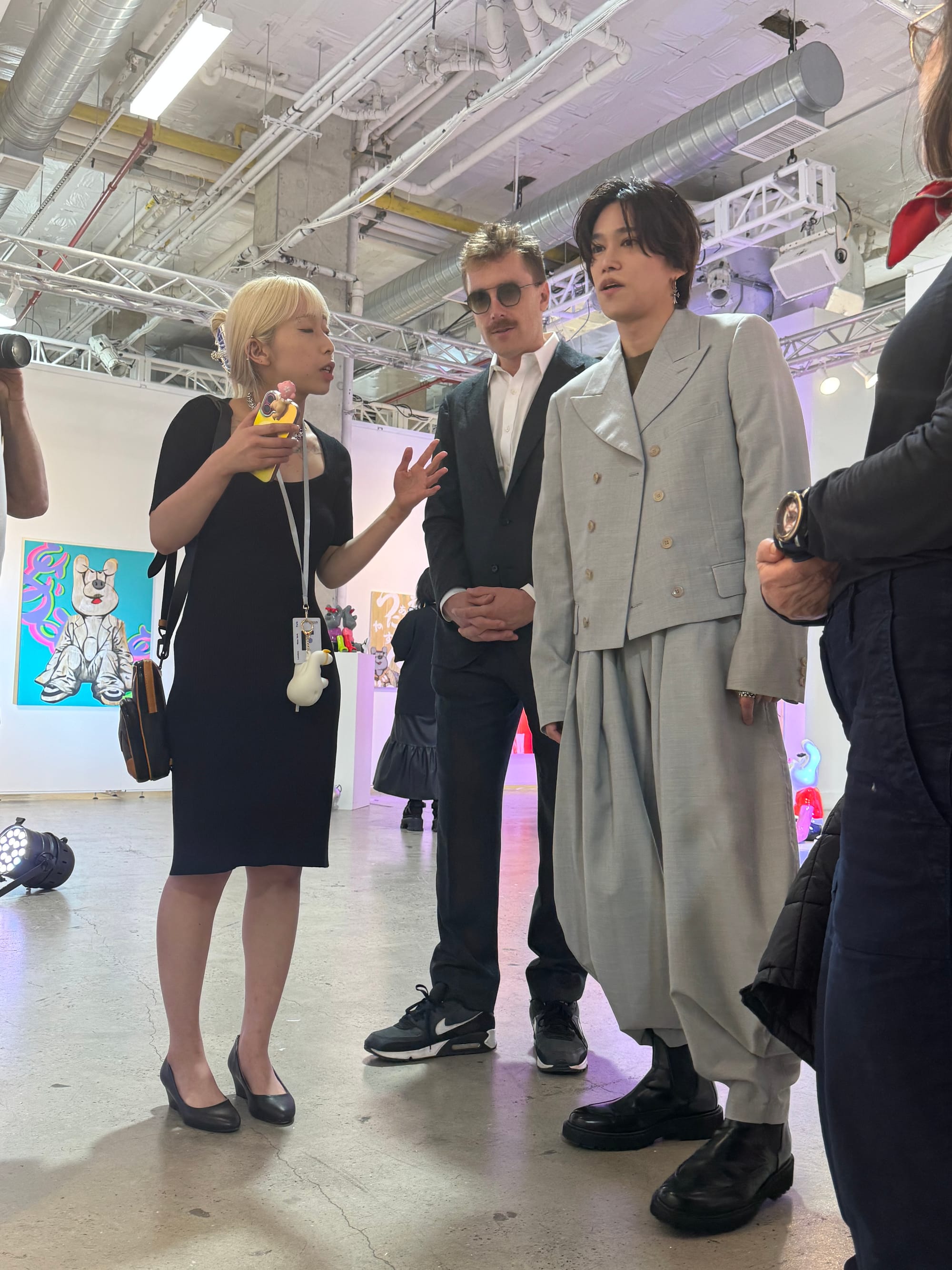
While trying to avoid electronic music coming from a flat-screen TV in the middle of the fair, I almost missed Japanese icon Kento Senga, visual artist and member of the boy group Kis-My-Ft2.
A small crowd gathered around him and his translator as he described FiNGA, his signature character with two fingers for ears. The pop star described sharing his artwork with his grandmother, who suffered from Alzheimer’s disease, as a way to connect with her.
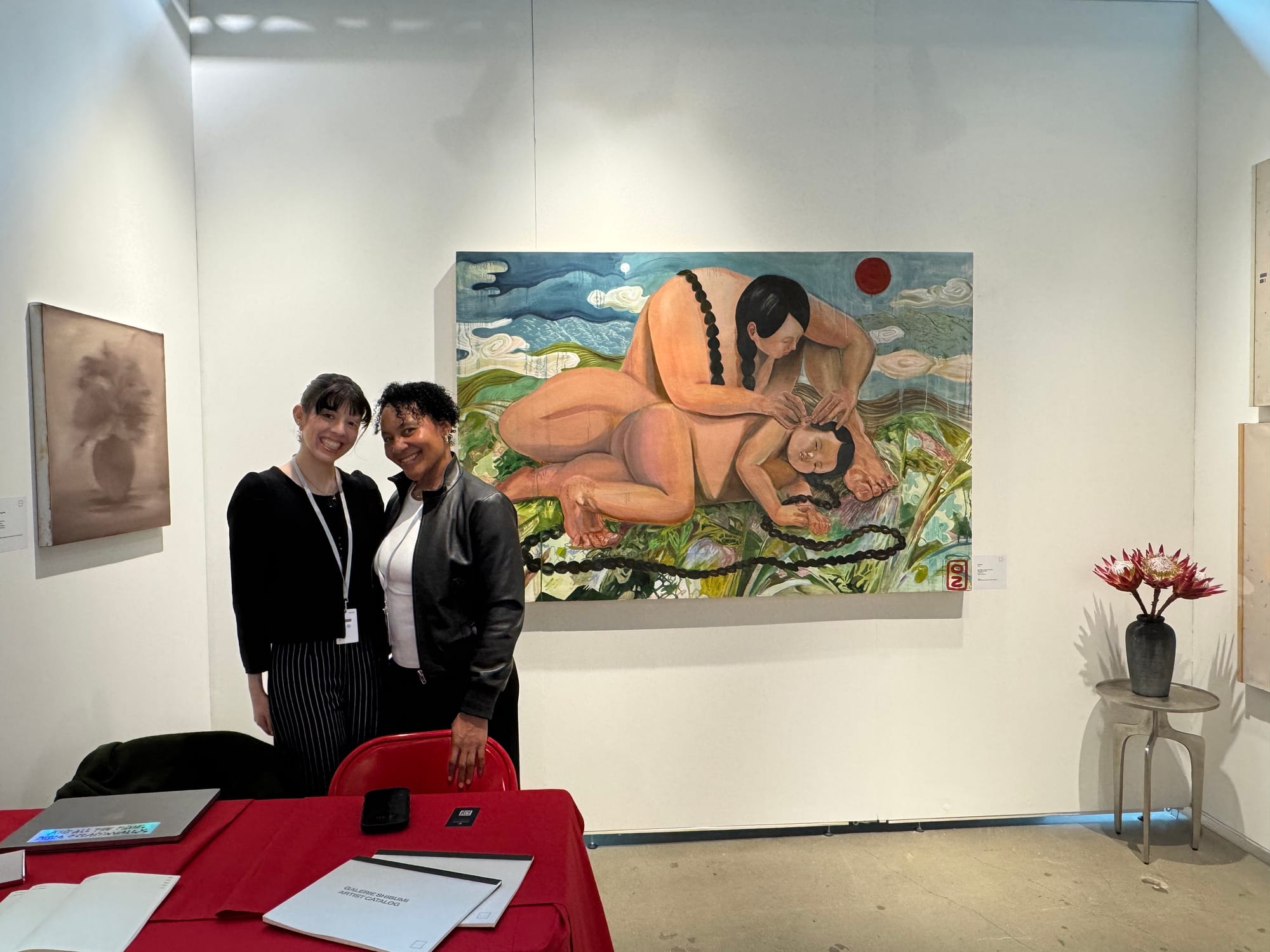
In a quieter part of the room, I met Folana Miller, director of Galerie Shibumi, sitting in front of Ari Kim’s large-scale painting “Back When the Tiger Smoked” (2025). The oil-and-ink-on-wood composition portrays two long braided nude figures, the largest embracing the other.
“It’s a historical piece that outlines the connection,” Miller said of the piece. “It’s obviously a human connection, but these two figures could literally be anything. They could be two men, they could be a mother and a daughter.”
You can’t travel far without seeing an oppressive LG screen. The heavy, sponsoring hand of Big Tech was palpable. The further I got into the location, the more skeptical I became of works of art that actively incorporated large screens, rather than criticizing them.
Yet the art on display that honored human or supernatural connections outshined the more technical works as unique, tender subversions of the theme that brought them together.
“‘What is art?’ is always the question we try to answer,” says Marina Zeballos, manager of Galerie Shibumi, “and I think art is everything that makes a person.”
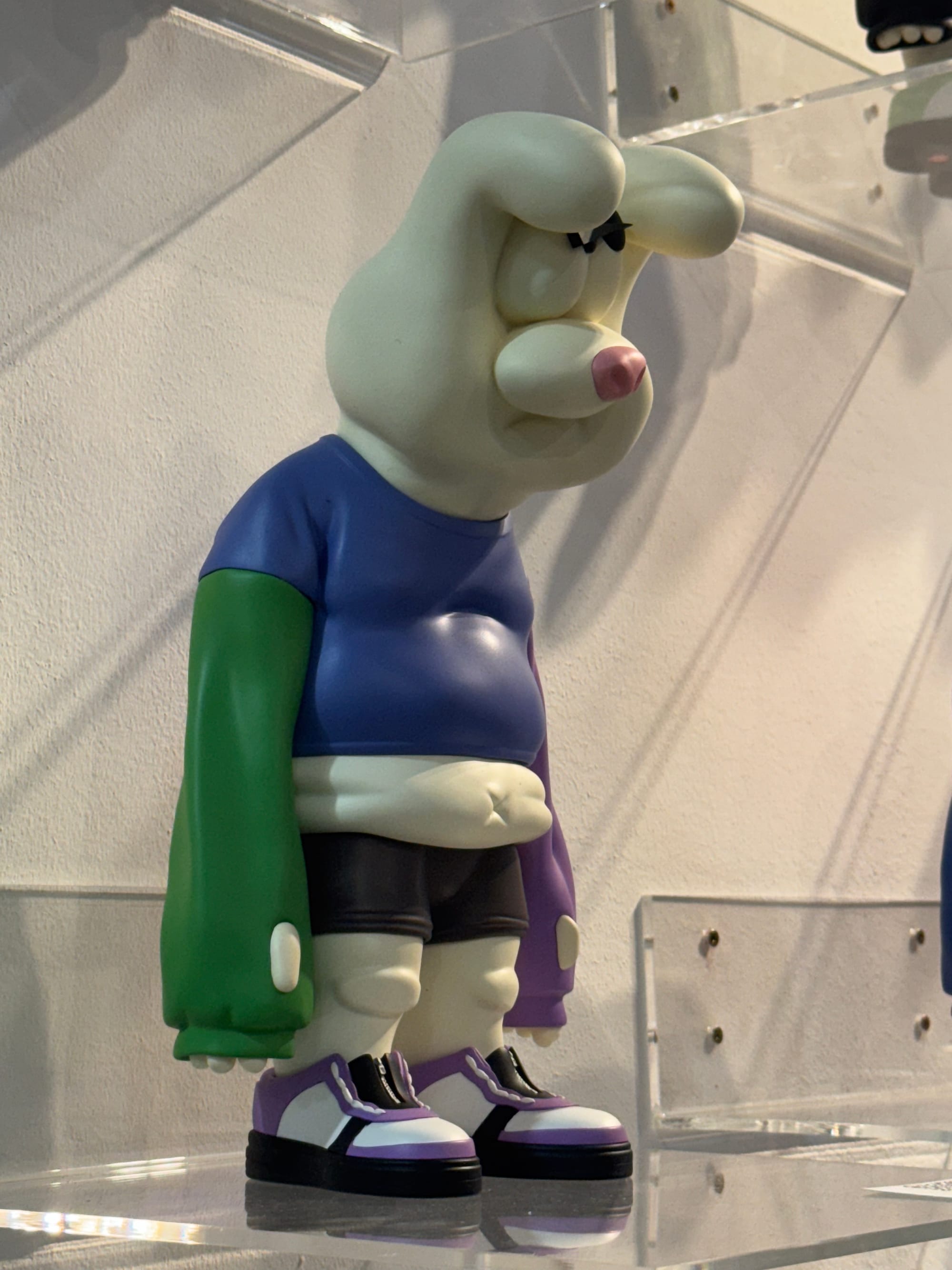
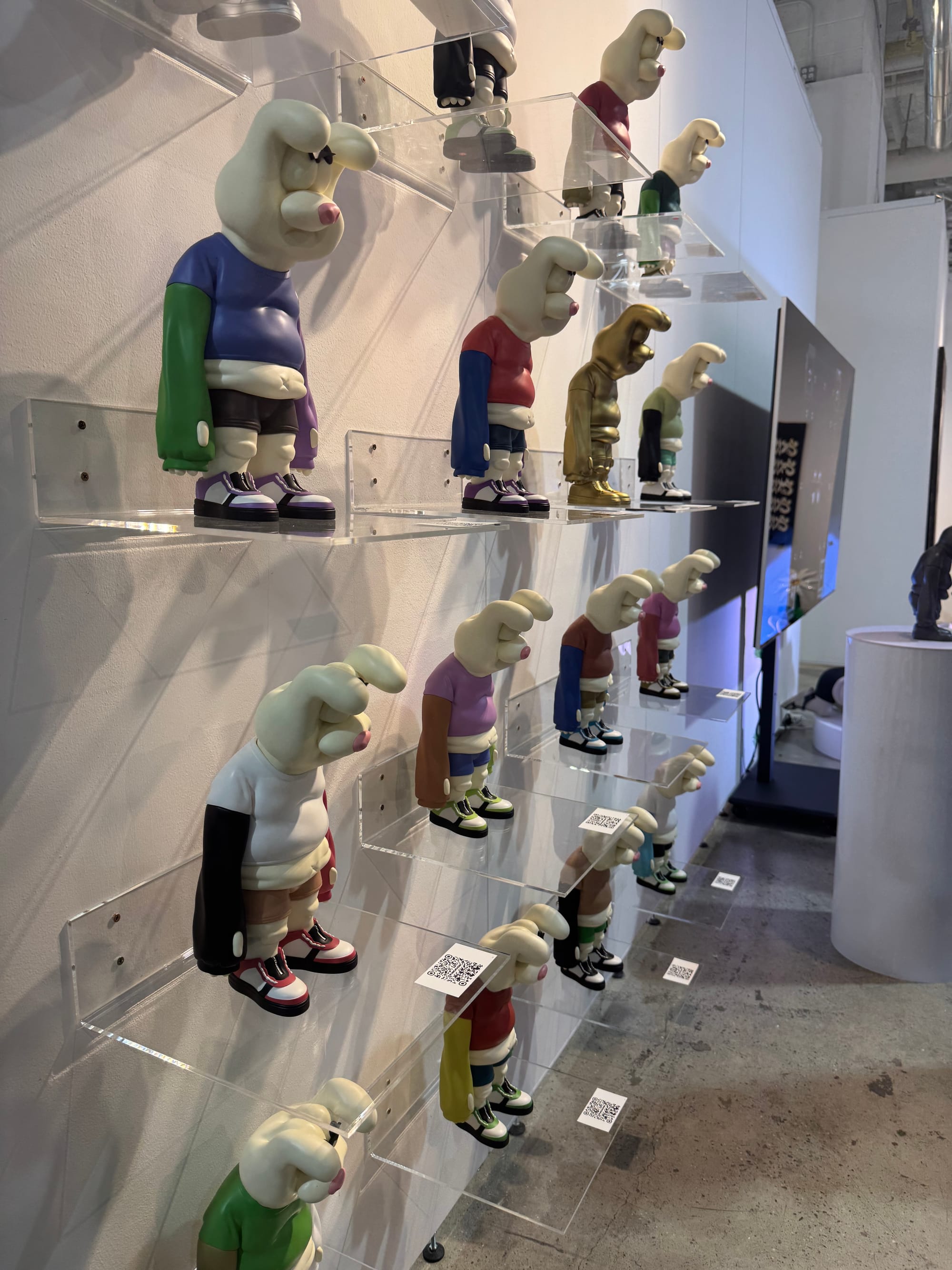
Kento Sengas FinGA characters