


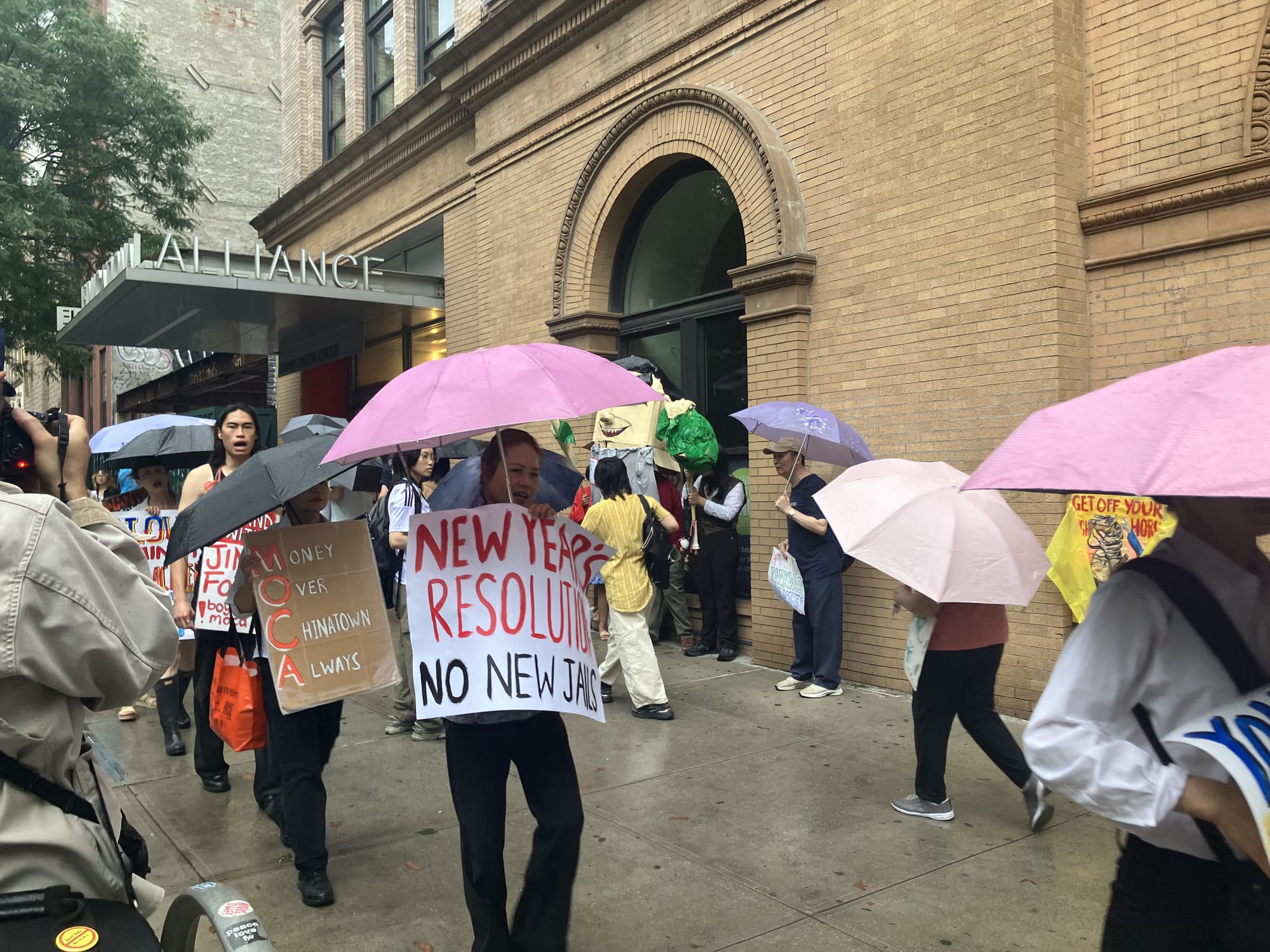
As New Yorkers braced for a fierce storm on Tuesday evening, July 21, dozens of demonstrators in rain gear marched in front of a Lower East Side community center holding signs that read: “Community United Against MOCA’s Racism,” “No Jail,” and “You’re Fooling No One.” Protesters also protected an appropriate effigy of Michael Lee, president of the Museum of Chinese in America (MOCA), from the bad weather.
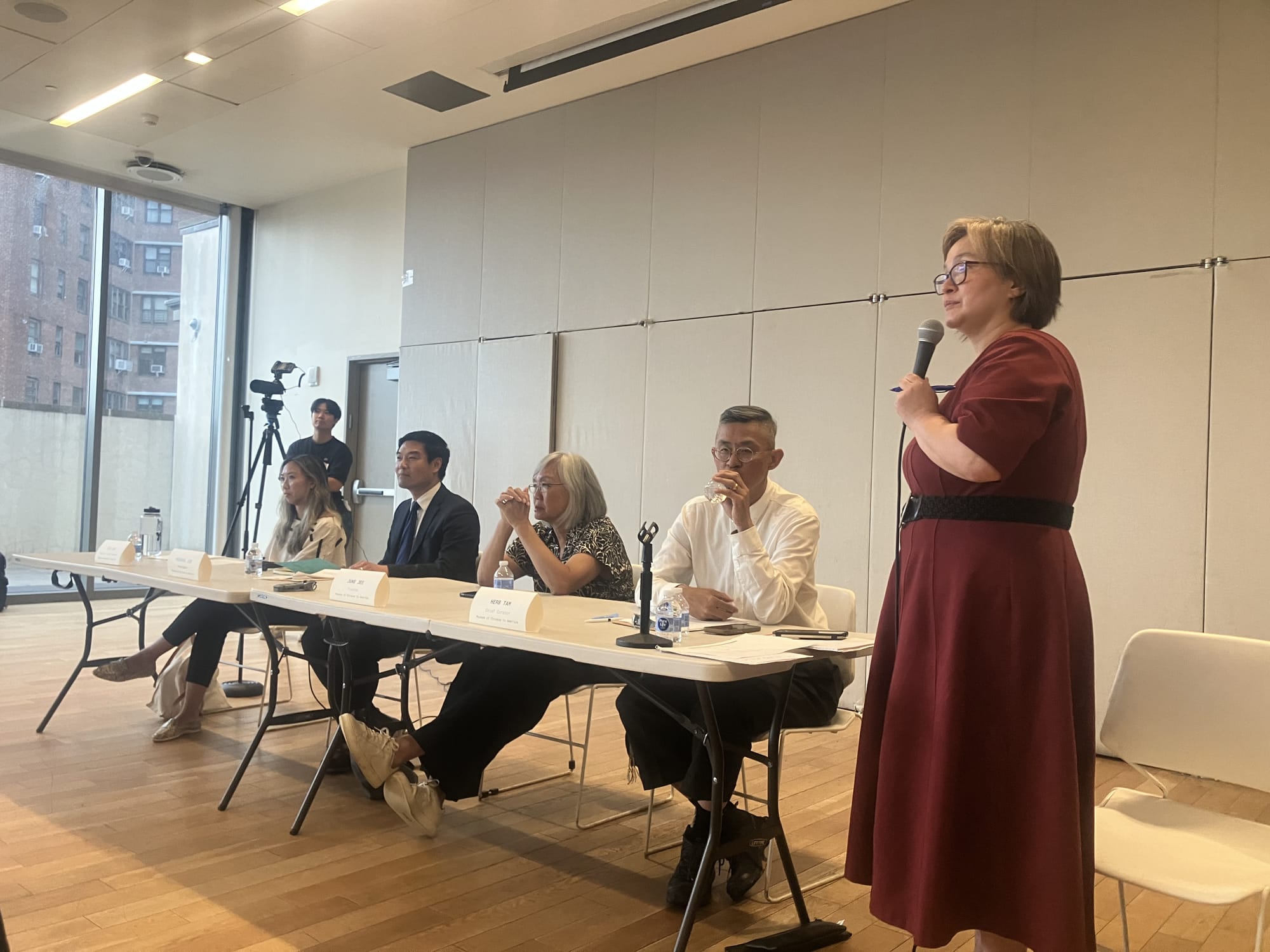
At the Manny Cantor Center, a panel of MOCA leaders heard testimony from members of the Chinatown community. During a town hall event hosted by the museum, Lee attempted to distance the institution from a $35 million capital grant — tied to the construction of a prison in Chinatown — that accepted from the city in 2019.
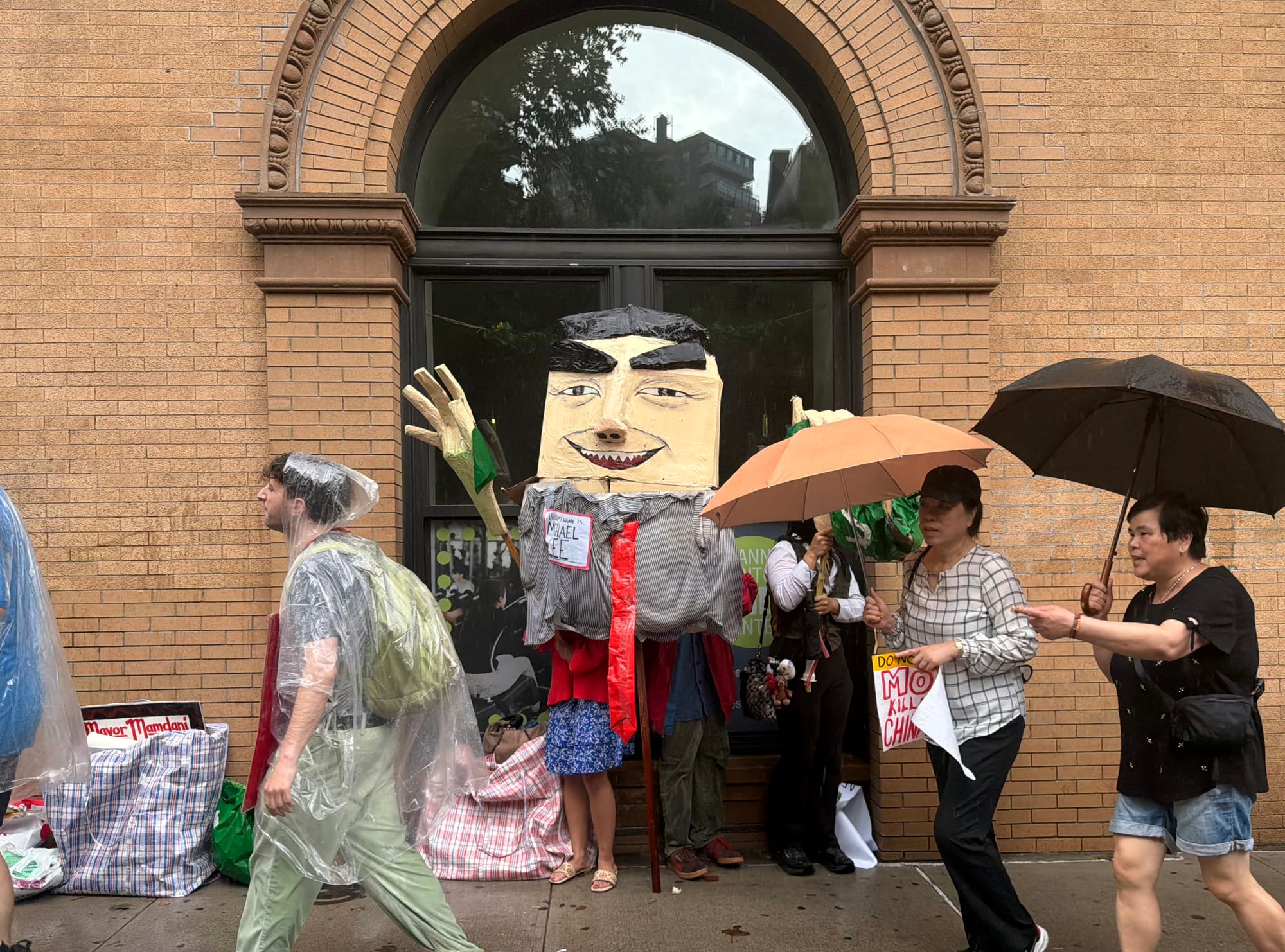
To the protesters outside, the capital grant, which the museum used to purchase the Center Street space it had previously leased, symbolized the institution’s acceptance of “prison money” and its perceived complicity in other issues inherent in a changing Chinatown, including gentrification and displacement.
Lee, who took charge in 2024, said the museum strongly opposes the prison’s construction but took the city’s money because it risked closure and the loss of space that had housed it since 2009.
The 46-year-old museum houses a collection of more than 85,000 objects documenting the Chinese-American diaspora. However, in the years since it accepted the grant, the museum has become a controversial institution in the neighborhood, sparking protests and exhibitions. recordings from artists who claim the institution profits from mass incarceration.
“MOCA still supports the new prison with their actions, despite what they say… they took the money,” Zi Shun Ning, organizer of Youth Against Displacement (YAD), told reporters. Hyperallergic outside the event.
Organizers from advocacy groups, including YAD, Planet Over Profit and East Park River ACTION, arrived at the site early and handed out pamphlets to passersby labeling MOCA’s town hall as a “clown hall.”
While Lee and the museum leadership viewed the funding as necessary for the institution’s survival, community members expressed concern that MOCA’s funding was inextricably tied to the city’s plan to build the Manhattan Borough-Based Jail. The facility, which the the world’s highest prisonis expected to replace Rikers Island Prison – with the construction of three other jails in the boroughs – following a court order to close the infamous prison due to human rights violations.
Other speakers at the town hall called on protesters to abandon their cause and defend the museum as a “vital, necessary home for our history and culture.”
During the town hall Hyperallergic Lee asked if he empathized and planned to address the grievances of the protesters outside.
“We respect everyone’s right to protest,” Lee responded. “They have every right to fight against the prison and see MOCA as a symbol of the prison; if that’s where they feel they should focus their energy, we fully respect that.”
He encouraged the protesters to shift their plea to moving the prison elsewhere.
“We chose this location so that those who felt uncomfortable entering MOCA itself could attend,” Lee added. “I have personally invited the Chinese Staff and Workers Association, as well as Youth Against Displacement, to participate in today’s discussion.”
Protester Aaron Yin blasted the museum’s framing of the $35 million grant at City Hall: “Will MOCA ever admit that the $35 million is prison money?”
Lee pushed back against the term “prison money,” reiterating that the museum applied for the grant “solely to purchase the building and ensure that it remains here in Chinatown.” The longtime warden complained that the investment coincided with the city’s announcement of the new prison system.
Yin handed out a 2021 print of a New York Magazine report which included an admission from the Department of Cultural Affairs (DCLA) stating that the grant was directly related to the city’s “border efforts to close Rikers Island.”
Civil rights attorney Rocky Chin expressed support for MOCA, saying, “We need an anchor that will preserve our family archives and address the pressing issues of our time, from the rise of anti-Asian violence to threats to birthright rights.”
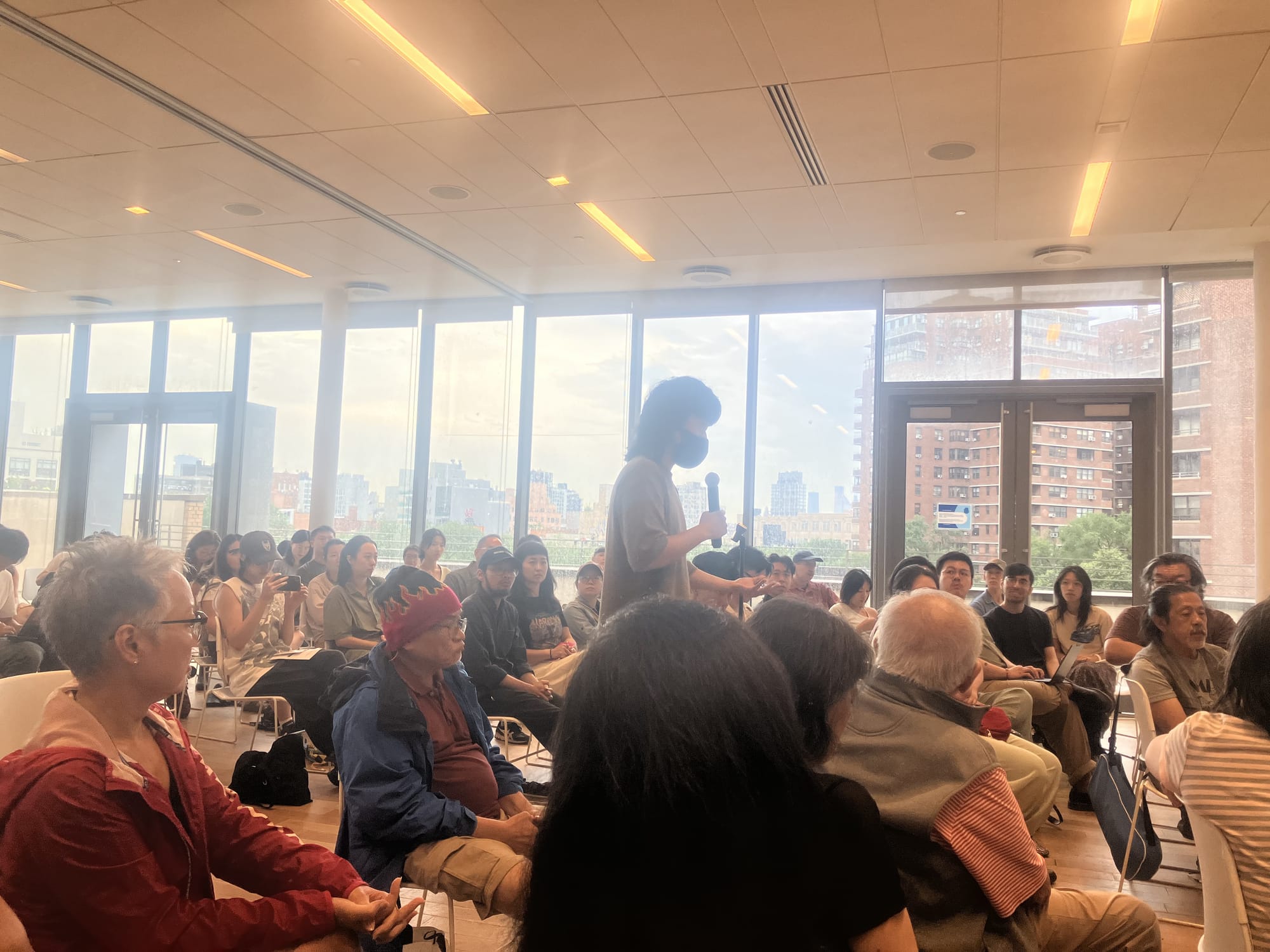
Another commentator, Melinda Chiu, who traces her ancestry back generations to Manhattan’s Chinatown, called on the museum and its protesters to resolve their differences but faulted the museum for its perceived lack of response over the past five years.
“It’s clear that prison is terrible for Chinatown,” Chiu said, adding: “I think instead of fighting with each other, we could also work together because Chinatown is dying due to gentrification.”
Outside the event, protesters drew attention to Lee’s concurrent status as a volunteer board member of the Chinese American Planning Council (CPC), the nonprofit home care organization they called the “worst sweatshop in New York City.” The CPC was mentioned in a court case the Legal Aid Society filed a complaint against the state in 2023 alleging “systemic wage theft” from home health care workers assigned to 24-hour shifts. During the town hall, Lee referred the audience to the CPC official statements on the case.
Protesters also reprimanded former MOCA board member Jonathan Chu, a real estate mogul who owned the Elizabeth Street building where beloved Chinatown restaurant Jing Fong closed during the pandemic.
One protester, Liang Chen, a longtime resident of the Lower East Side, related it Hyperallergic he worried that a prison in Chinatown would only worsen the neighborhood’s problems.
“Chinatown’s economy has declined and it’s getting worse,” Chen said. “Fewer people are coming to Chinatown to spend their money.”
Pat Arnow, affiliated with the East River Park ACTION and part of the Coalition to Protect Chinatown, said Hyperallergic during Tuesday’s demonstration that the protesters would like “a good-faith gesture to show that they really mean it.”
“If they speak out strongly against prison, it could make a difference,” she said. “Because they are the ones in power, and we are not.”


