


Book review
A new book maps the network that allowed Douglas Latchford to forcibly rip Khmer statues from their homes and funnel them into Western institutions.

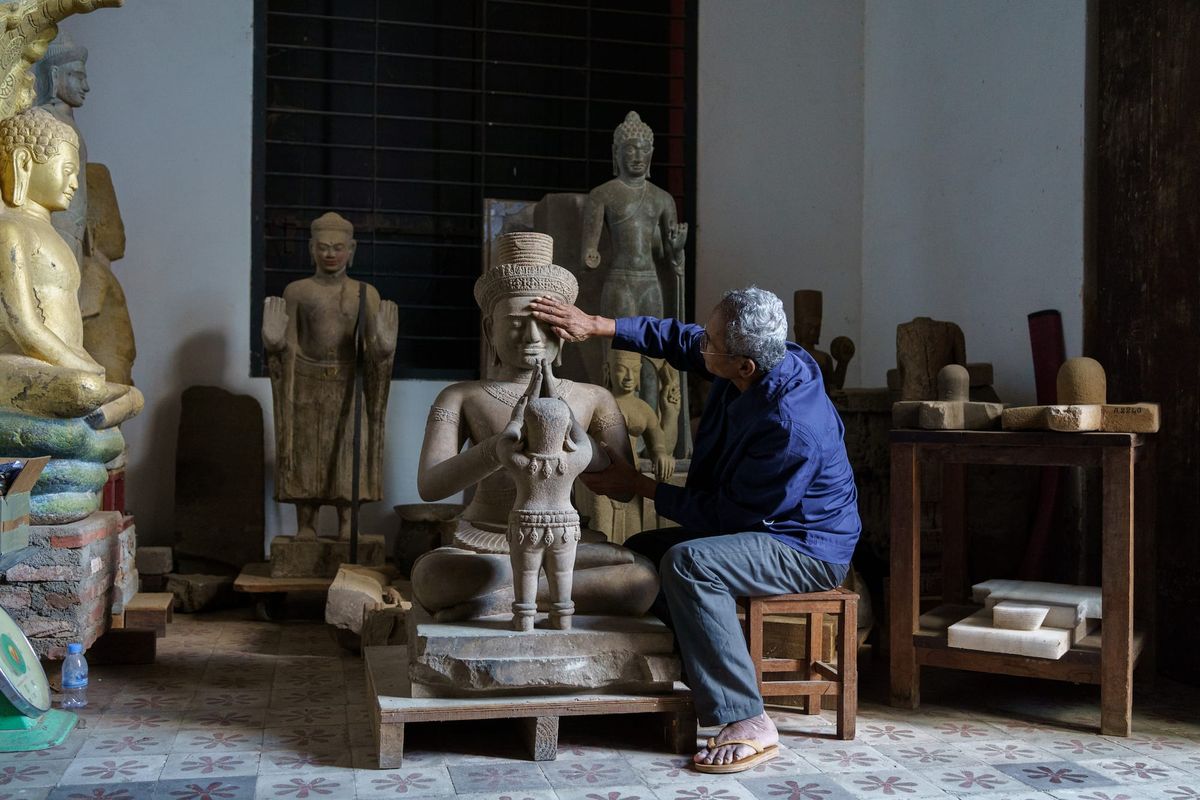
In the middle of Matthew Campbell’s The man who stole the gods (2026) is British dealer Douglas Latchford, accused of trafficking looted Cambodian antiquities on a large scale before his death in 2020. For Latchford, Khmer sculpture was a luxury asset to be exploited, an “intense hobby” that grew into “a real business.” Latchford’s success depended not only on criminal networks that supplied and transported these objects, but also on the willingness of museums, dealers, collectors, and scholars to accept fragmented or problematic provenance, so long as the objects themselves retained the aura of rarity and beauty. Statues were beheaded and dismembered, taken from their sanctuaries, but somehow these objects arrived pristine and spiritually deodorized in New York galleries and London auction houses.
Campbell portrays Latchford as a charismatic product of a global hunger for beautiful things, which was deeply entrenched in the elite institutional structures that enable the movement of looted cultural objects into the legitimate art market. Latchford took advantage of the special privileges and geopolitical conditions of the 1960s, 1970s and 1980s, which allowed wealthy Western expatriates to build a life in an ‘exotic’ postcolonial environment while maintaining close relationships with political and social elites. His social and cultural capital as an eventual member of the “inner circle of the true expatriate elite,” Campbell writes, allowed him to move comfortably between the exclusive worlds of diplomacy, collecting, and high society, further legitimizing both himself and the objects he handled.
As a result, Latchford built close relationships with collectors, dealers, museum curators and academics around the world, who served him for “decades of service.” For years he provided them with a “constant supply of newly stolen items.” Among his clients was the Metropolitan Museum of Art, “Latchford’s most powerful marketing tool.”
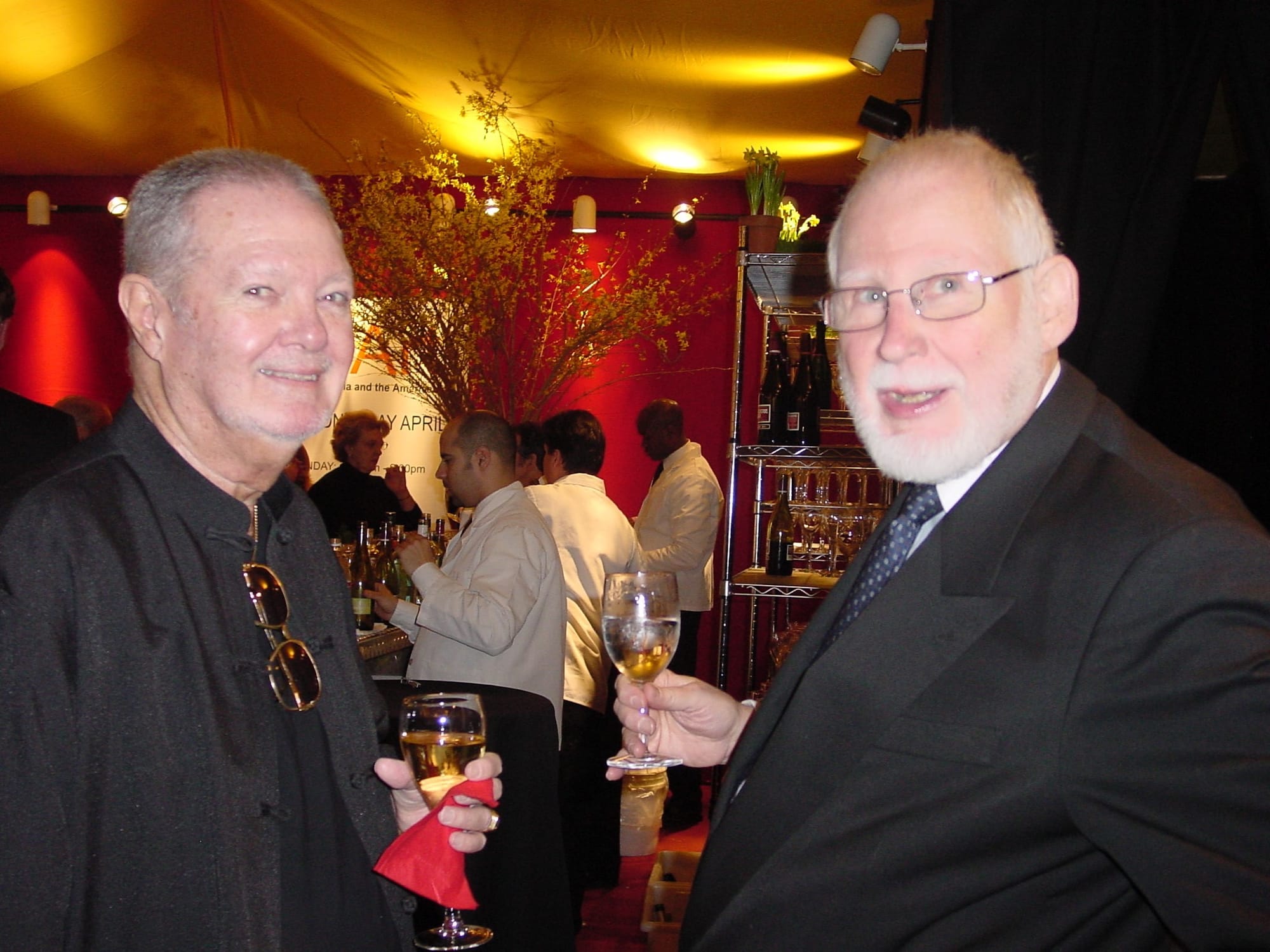
He tried to assert himself as a ‘giant in his field’ through his publications with the American scholar Emma Bunker. These books proved to be a useful way to establish the invented provenance and support the sale of the objects contained within. However, things fell apart when these books allowed experts to connect the statues stolen and sold by Latchford to pedestals still standing in Cambodia.
There are moments in it The man who stole the gods when the story leans heavily on the conventions of investigative thriller writing through its pacing, cliffhangers, and dramatic revelations. Campbell’s sensitivity to the irreversible loss caused by these thefts, however, is what sets this book apart from much of the other reporting on “Dynamite Doug,” as Latchford is often called. Campbell’s description of the physical violence of looting is particularly empathetic: he refuses to romanticize the objects or the institutions that claim to protect them, and pushes back against the cathartic language of the art market, which tends to describe them as beautiful pieces of Asian art rather than sacred deities forcibly looted from communities of origin and trafficked across borders to be sold to the highest bidder. Campbell sees the images as evidence of absence, with severed sandstone feet still entrenched in the Cambodian soil as spaces haunted by violent extraction and greed.
With these images, Campbell’s main argument is that the bureaucracy of the art market is an effective laundering mechanism for looted cultural heritage. He emphasizes that cultural heritage cannot be separated from the conditions under which it circulates. The art market’s polished language of acquisition, donation and collection management obscures the layers of violence and inequality on which it functions. Associated provenance data, such as ship manifests, expert certificates of authenticity, auction catalogs and conservation reports, facilitate this whitewashing process by crafting a plausible story that the art market is happy to accept without question. In short, they are evidence of institutional complicity.
The repatriation of items associated with Latchford continues, thanks in large part to the investigative efforts of attorney Bradley Gordon and his team. Campbell sees this as a partial repair, because it cannot undo the decades of extraction and desecration. But the returns do challenge the long-standing assumption that the Western museum is the rightful endpoint of these sacred objects.
Campbell’s book reveals the broader systems that continue to shape cultural property: the continued authority of Western institutions to determine their own legitimacy without accountability. Ultimately, Campbell asks readers to reconsider what museums protect and who they serve. Hopefully, The man who stole the gods will encourage a more critical interrogation of museums, galleries and auction houses as places of power, where cultural value is constructed through deeply uneven histories of commodification that continue to shape the art market today.
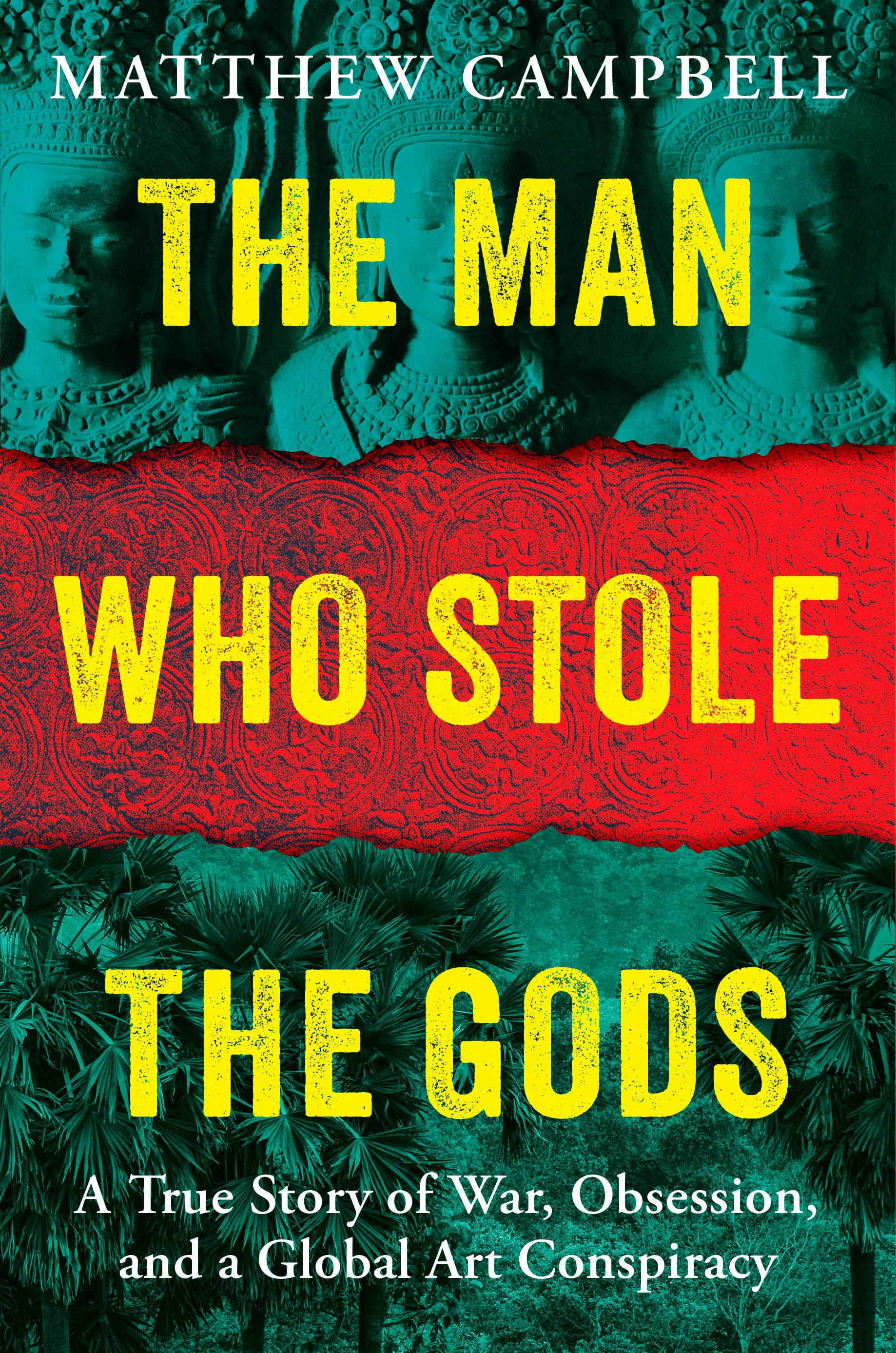
The Man Who Stole the Gods: A True Story of War, Obsession, and a Global Art Conspiracy (2026) by Matthew Campbell will be published by Porfolio on June 2 and is available online and through independent booksellers.


