


With improvements in battery technology, rising component costs, and a response to the space (both physical and mental) that phones take up in our lives, it may be time for another attempt at a revival of the mini phone. Who is with me?
Two separate conversations with non-technical friends have made me think that Apple and Asus were a bit hasty in exiting the mini phone market.
Friend one tried to meet my expected disdain as he carefully pulled out a brand new iPhone Air. His eagerness to justify himself was understandable, as the reviews from my colleagues in the tech press were less than glowing.
To paraphrase his point: “I don’t need three cameras. I just want a phone that’s comfortable to use when I’m in bed.” It was impossible to find fault with his pithy speech.
Friend two was looking for a replacement for his creaking iPhone 13 mini – Apple’s last compact phone yet, launched in 2021. Although a very different personality from friend one, his list of requirements was largely similar.
He didn’t take many pictures, he wasn’t what you would call a ‘power user’. He just wanted a device for WhatsApp, Instagram, email and a few music-making apps – crucially in the smallest, least obnoxious form factor possible.
Jim Martin / Foundry
Don’t call it a backlash
It’s too vague to call it a smartphone backlash, but there’s certainly a sense that many people are tired of the space (both physical and mental) that smartphones take up in their lives.
Millennials and Gen Xers look back on formative years enhanced by personal interactions and relative anonymity, while Gen Zers lament being permanently connected. There is even a small revival in the use of dumbphones.
The uncomfortable fact for smartphone makers is that many of us expect less from our phones, not more. But maybe that doesn’t have to be so uncomfortable.
As component costs rise, manufacturers are struggling to innovate. They are either forced to jack up the price of their latest smartphone offering, or essentially demand money for old rope.
What if the answer to their problems is to give us less? To give us smaller phones with smaller screens, less RAM, more modest processors and less elaborate camera systems – all at a lower, possibly even mid-range price.
The Achilles heel of previous small handsets has always been battery life, but that is no longer a factor. Thanks to silicon-carbon (Si/C) technology, OnePlus has just announced a phone that’s about the size of an iPhone 17 Pro (so relatively small by modern standards), but with a battery capacity that’s about 88% higher.
With higher density batteries on board, coupled with modern mid-range processors that are often indistinguishable from handheld flagship equivalents, you have to think a modern mini phone could give a lot of people what they actually want.
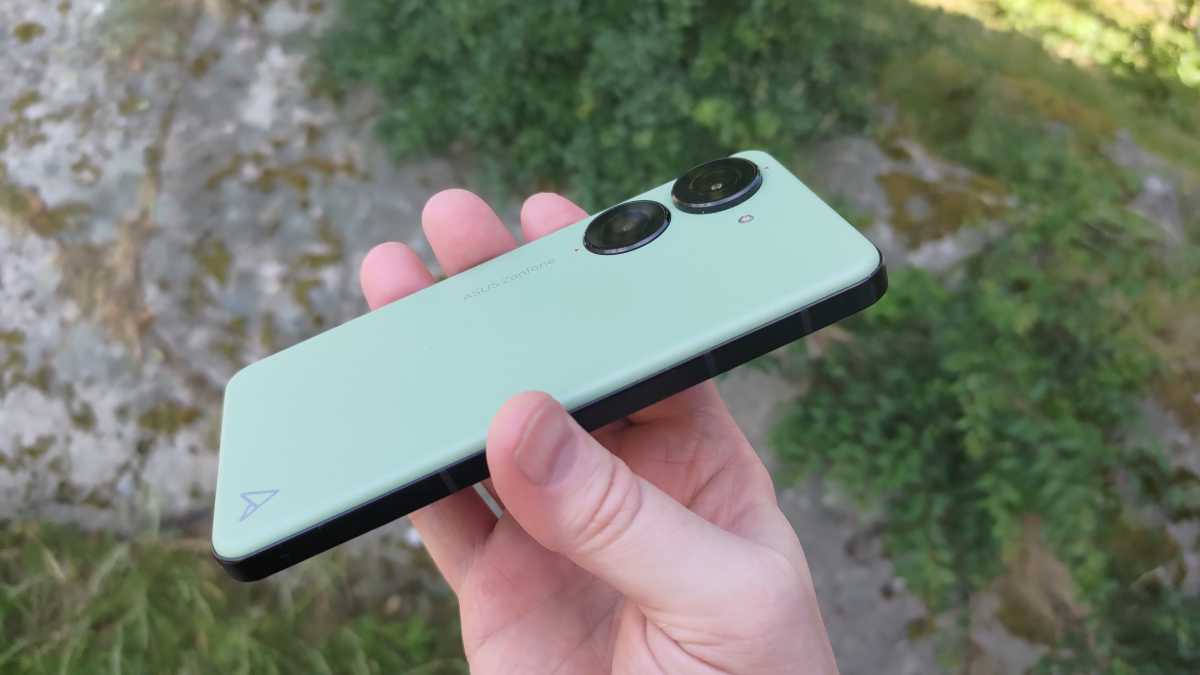
Mattias Inge
Haunted by failure
The uncomfortable fact in all of this is that both the previous generation of mini phones and the current generation of slim phones have been commercial failures. But that could be a market positioning issue rather than anything else.
Perhaps people objected to being asked to pay flagship (or near-flagship) prices for phones that are less capable, even if those extra capabilities proved unnecessary for many.
I don’t envision a skinny iPhone 17 Pro Max or a tiny iPhone 13 — essentially what the iPhone Air and iPhone 13 mini ultimately turned out to be — but rather a smaller and even cheaper iPhone 17e.
I know at least two people who would be interested in something like that. Any other customers?


